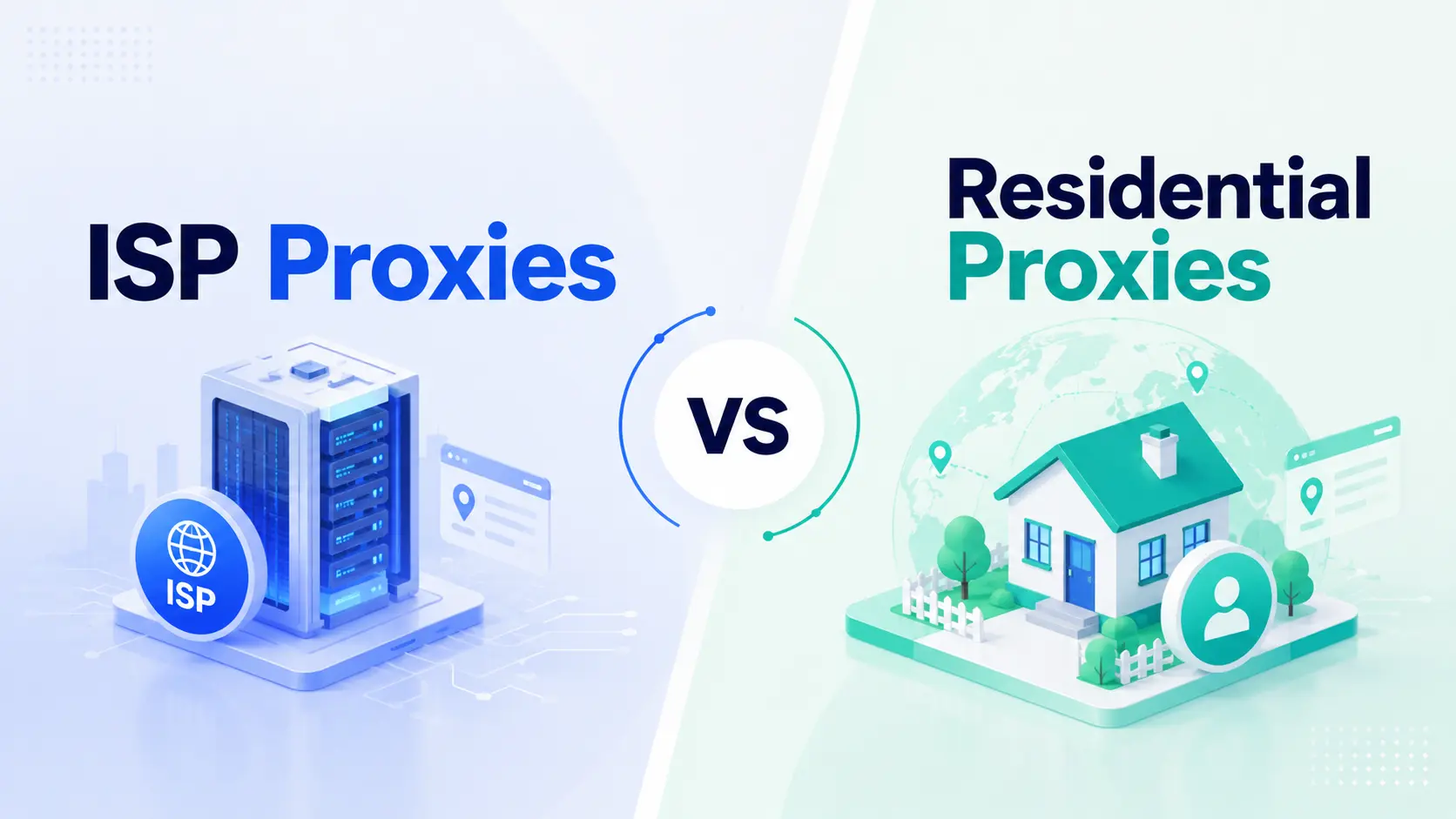
ISP proxies and residential proxies are two popular proxy solutions, but they serve different purposes. ISP proxies combine the authenticity of ISP-assigned IPs with the stability of data center infrastructure, while residential proxies use IP addresses from real residential devices and networks.
Choosing the wrong proxy type can affect scraping success rates, connection stability, and overall project efficiency. This guide compares ISP and residential proxies, covering their advantages, limitations, pricing, and common use cases to help you choose the right solution for your needs.
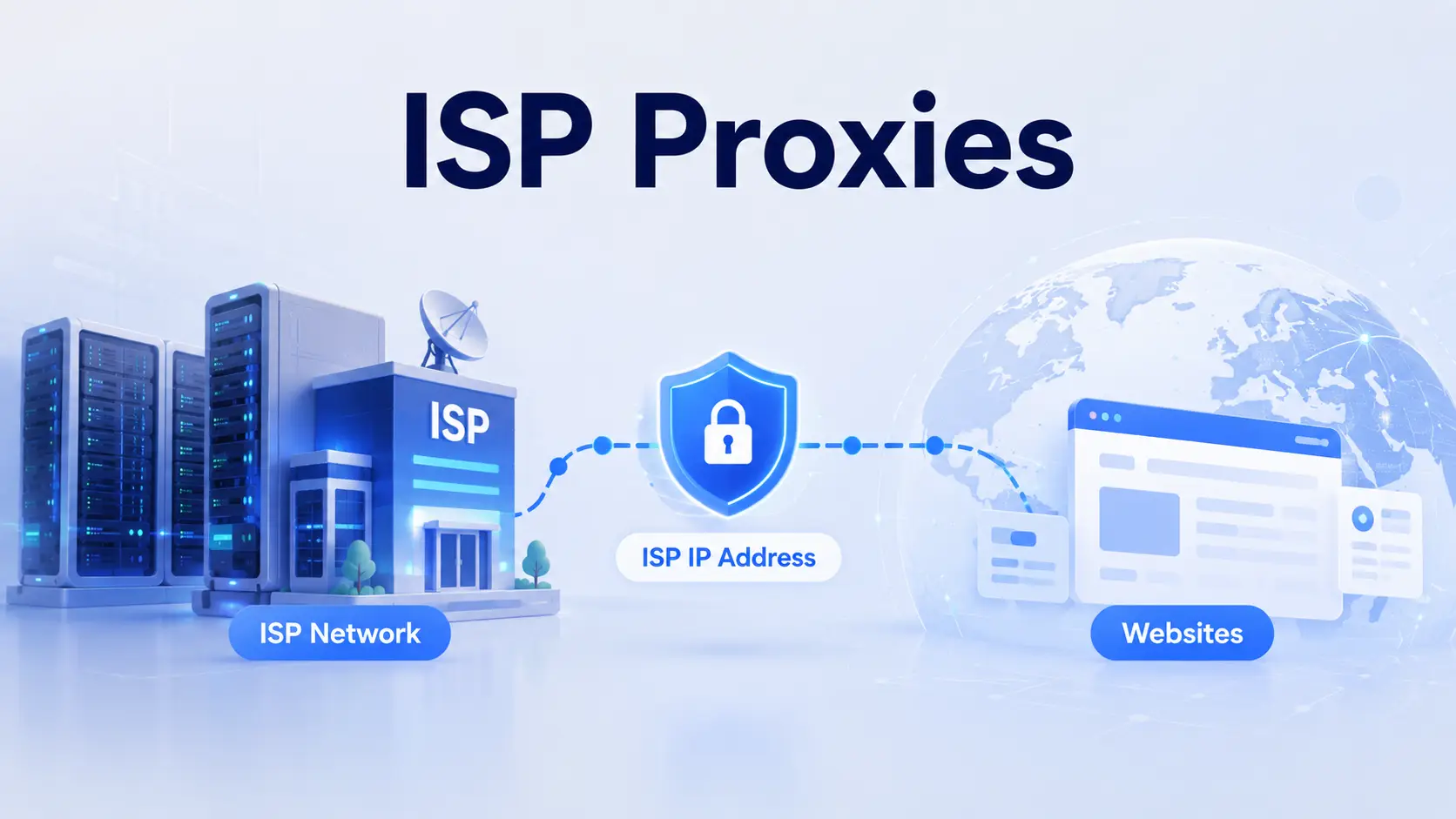
Internet Service Provider (ISP) proxies are a type of proxy that uses IP addresses registered with legitimate Internet Service Providers while being hosted on dedicated servers. This setup provides users with authentic ISP-backed IP addresses without relying on individual residential devices.
When a user connects through an ISP proxy, their request passes through a proxy server using a real ISP-assigned IP address. The target website sees the request as coming from a regular ISP connection, while the proxy server forwards the traffic to the user.
ISP proxies combine the authenticity of ISP-assigned IPs with the stability of server-based infrastructure, making them suitable for tasks that require consistent connections and predictable IP management. These qualities are exactly what to look for when evaluating the best ISP proxies on the market. Their main advantages include:
Faster speeds: ISP proxy traffic is routed through data center servers, which usually provides lower latency than residential proxies that rely on real user devices.
Higher stability: Since ISP proxies do not depend on individual residential devices, they typically offer more consistent uptime and availability.
Static IPs for long-term use: Dedicated static IPs help maintain consistent identities for login sessions, account management, and other long-term projects.
Predictable IP allocation: ISP proxies generally provide more structured IP ranges, making it easier to manage a specific number of IPs.
While ISP proxies offer strong stability and consistent IP identities, they also have some limitations compared with larger residential proxy networks. These drawbacks may affect their suitability for certain use cases.
Smaller IP pool: The available IP range depends on the proxy provider’s partnerships with ISPs, so ISP proxy pools are usually much smaller than residential proxy networks.
Limited geographic coverage: ISP proxies generally offer fewer locations, cities, and carrier options compared with residential proxies.
May still be detected by advanced anti-bot systems: Although ISP proxies are harder to identify than traditional data center proxies, their IP ranges are relatively fixed and traceable. Strict platforms may still flag them as suspicious traffic.
Not ideal for frequent IP rotation: Since ISP proxies typically use static IPs, they are less suitable for tasks that require frequent identity changes or automatic IP rotation.
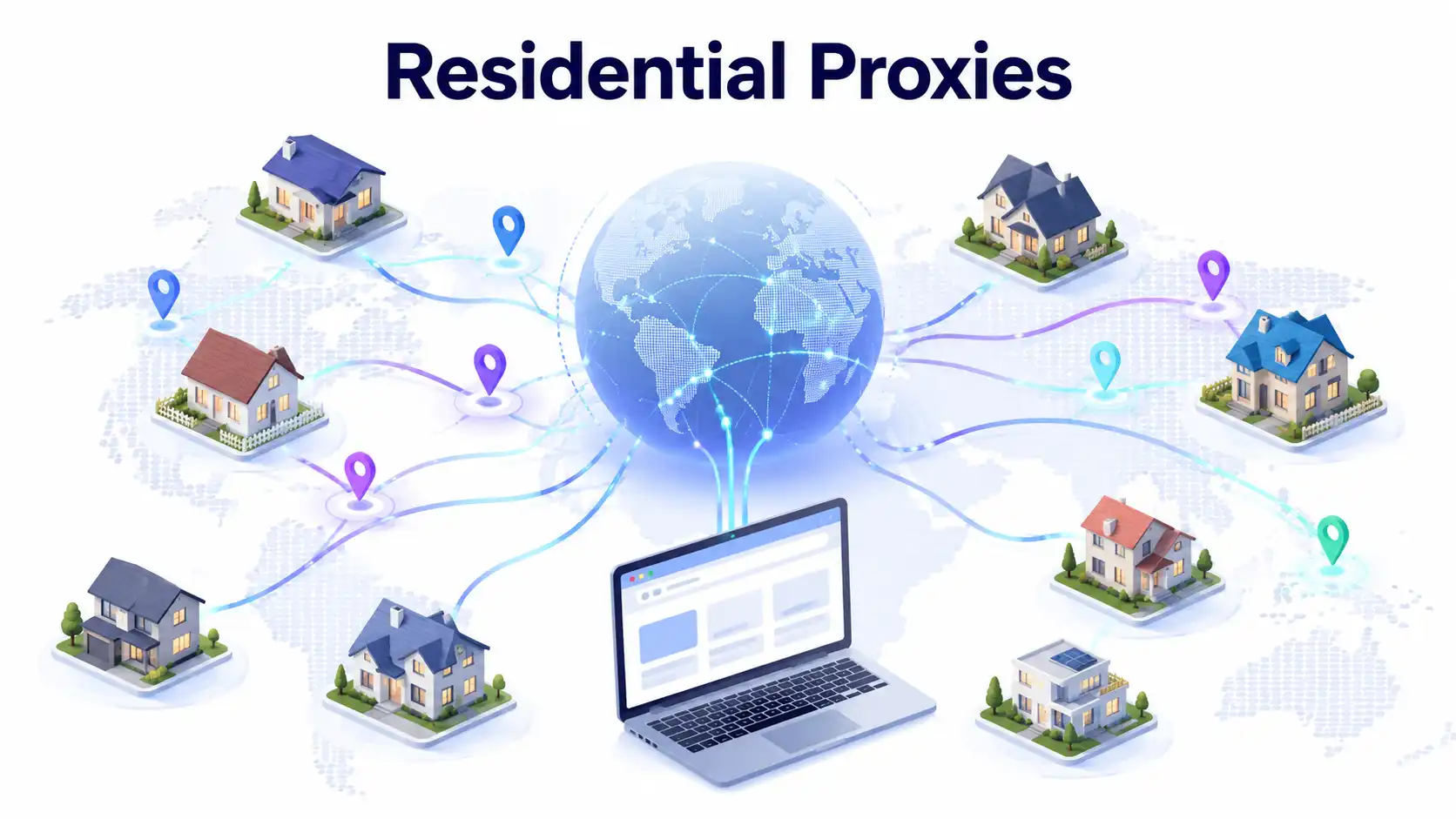
Residential proxies are proxy servers that use IP addresses assigned to real residential devices and networks. Unlike data center proxies, residential proxies route requests through genuine residential IPs, making online activity appear as if it comes from regular home users.
When a user connects through a residential IP proxy, their request is routed through a residential IP before reaching the target website. The proxy provider manages a pool of residential IPs from different locations, allowing users to access diverse IP addresses for tasks that require broader geographic coverage and more natural traffic patterns.
Residential proxies have several characteristics that make them different from other proxy types. The following points highlight the key advantages they provide.
Higher trust from real residential IP addresses: Residential proxies use IP addresses assigned to real home or mobile networks, making them harder to identify as proxy traffic based only on IP ownership.
Larger IP pools and broader coverage: Residential proxy networks are built from many devices and locations, often providing wider coverage across countries, cities, and local networks.
Flexible IP rotation options: Residential proxies can support automatic IP rotation or sticky sessions that keep the same IP for a period of time, allowing users to manage IP changes based on their needs.
Better performance against strict detection systems: Residential proxies generally have a lower chance of being blocked by platforms with advanced proxy detection. However, detection still depends on factors such as user behavior and IP quality.
While residential proxies provide authentic IP sources and flexible access options, they also have some limitations due to their reliance on real residential networks. These factors should be considered when choosing a proxy solution.
Speed and stability depend on end-user networks: Since traffic passes through real home or mobile networks, connection speed, latency, and stability may vary based on the device’s network conditions.
IP availability may change over time: Residential devices can go offline, switch networks, or leave the proxy network, making residential IP pools less predictable than static proxy solutions.
Less suitable for long-term fixed IP use: Due to the dynamic nature of residential IP sources, they are not ideal for tasks that require the same IP address to remain available for extended periods.
IP source compliance varies by provider: Different residential proxy providers may use different methods to obtain IP access. Users should choose providers that clearly explain their IP sourcing practices and ensure proper user consent and compliance.
ISP proxies and residential proxies differ mainly in their IP sources, hosting environments, and management methods. These differences affect how each proxy type performs in areas such as connection consistency, IP availability, and traffic characteristics.
The following table highlights the key differences between ISP proxies and residential proxies across several important factors.
Feature | ISP Proxies | Residential Proxies |
IP Source | Data center servers using IPs registered with real ISPs | Real residential and mobile devices |
Speed | Fast with stable server infrastructure | Moderate and affected by end-user network conditions |
Stability | High | More variable |
IP Rotation | Mostly static | Dynamic rotation or sticky sessions |
Anonymity | High, with residential-looking ISP attribution | Very high, using real user IP addresses |
Detection Risk | Low, but fixed IP ranges may be easier to track | Lower in many cases due to diverse residential IP sources |
Geo-Targeting | Usually available at country and city levels | Can often target more specific locations, including cities, ISPs, or ZIP codes |
Pricing Model | Usually charged per IP/month | Usually charged per GB of traffic |
The main differences between ISP proxies and residential proxies are determined by how their IP addresses are sourced and managed. ISP proxies rely on IP addresses assigned by ISPs but operate through controlled server infrastructure, while residential proxies use IPs connected to real user networks. These different infrastructures influence factors such as IP availability, connection consistency, and traffic patterns.
For ISP proxies, the separation between IP ownership and hosting environment allows providers to maintain more predictable connections. Residential proxies, on the other hand, depend on real devices and networks, making their IP availability more dynamic and closer to normal user behavior.
Different projects have different requirements for IP stability, location coverage, and flexibility. ISP proxies and residential proxies each have their own advantages in specific scenarios.
Best for ISP Proxies:
Social media account management: A static ISP proxy is well suited for managing business social media accounts, including content publishing, message replies, and account monitoring. It helps maintain a consistent login environment and reduces extra verification caused by frequent IP changes.
E-commerce seller account management: These proxies work well for managing authorized seller accounts on platforms like Amazon, eBay, or independent stores. Their stable IP addresses help maintain continuous sessions for product updates, order processing, and customer support.
Fixed-location SEO rank tracking: ISP proxies are useful for monitoring keyword rankings from specific countries or regions over time. Their consistent IP locations help provide more reliable SERP data and search results.
Logged-in website and app testing: They are suitable for testing account dashboards, shopping flows, checkout processes, and other login-based features. Keeping the same IP can reduce session interruptions during testing.
Long-running data collection from moderately protected sites: ISP proxies can support continuous data collection from websites with moderate access restrictions, such as tracking product pages or keyword changes. However, they are less suitable for large-scale scraping that requires frequent IP rotation.
Best for Residential Proxies:
Market intelligence collection: Residential proxies are suitable for collecting pricing, inventory, and market information across different regions. They use real residential IPs to access localized data and reduce location-based differences.
Ad verification: These proxies allow advertisers and monitoring platforms to view ads from different countries or cities, helping verify ad placement, content, and landing page consistency.
Localized website and content testing: Residential proxies help test regional variations in websites, including language, currency, product availability, promotions, and access restrictions across different locations.
Large-scale AI and search data collection: They are commonly used for collecting large volumes of public web data, search results, and localized content. Rotating residential IPs provide broader coverage for projects requiring multiple locations and diverse IP sources.
ISP proxies and residential proxies usually follow different pricing models based on how their resources are managed. ISP proxies are commonly charged by the number of IPs and subscription period, while residential proxies are typically priced based on the amount of traffic used (GB).
Proxy pricing varies between providers based on factors such as IP resources, package size, subscription period, and traffic volume. As a reference, IPcook ISP proxies use an IP-based pricing model, with costs ranging from around $0.048 to $0.080 per IP/day. Larger IP packages and longer subscription periods usually come with lower unit prices. IPcook residential proxies use traffic-based pricing, ranging from approximately $0.3 to $3.2/GB, with higher-volume plans offering more competitive rates.
The more cost-effective option depends on usage needs rather than the listed price alone. ISP proxies are usually more predictable for projects requiring a small number of fixed IPs over a long period, while residential proxies offer more flexibility for tasks involving frequent IP changes and variable traffic volumes.
The right proxy choice depends on your project requirements, including budget, IP stability, rotation needs, and location coverage. ISP proxies are a practical option for users who need stable IPs with predictable costs, while residential proxies are better suited for large-scale operations that require frequent IP rotation and wider geographic coverage. When requirements are unclear, testing a small number of proxies first can help determine the best fit before scaling up.
Choosing a provider with flexible proxy options can make it easier to adapt as your project grows. IPcook offers both ISP proxies and residential proxies with different pricing models to support various use cases. Explore IPcook’s proxy solutions and find the right proxy for your project.