How to Buy Verified LinkedIn Accounts (2026 Complete Guide)

You’re here because you’re thinking about buy verified LinkedIn accounts, and you don’t want to waste money. Maybe you already bought one and it got restricted right after login. Or you found a seller promising “clean aged profiles” and you’re not sure what’s real and what’s bait. Either way, you want accounts that work, not accounts that disappear in a day.
In this guide, we’ll show you what to watch for when you buy LinkedIn accounts, where to buy, and how to screen sellers before you pay. You’ll also learn how to set up a stable network environment so your day-to-day work does not get interrupted.
👉 To keep aged LinkedIn accounts alive, pair a clean browser environment with IPcook's ISP proxy to reduce avoidable flags and disruptions.
What Is a Verified LinkedIn Account?
When you want to buy verified LinkedIn accounts, “verified” usually just means the profile looks like a real person. It often has a complete profile, a consistent work history, and normal day to day activity. Some sellers also use “verified” to suggest extra proof, but the term is not used consistently across different shops.
So do not treat “verified” as a safety badge. Treat it as a quality claim. What matters most is whether the profile looks credible to other people and whether it fits the kind of work you plan to do.
Why You Might Need to Buy Aged LinkedIn Accounts
Most of you are not buying aged LinkedIn accounts for status. You just want a faster start. When you buy verified aged LinkedIn accounts, you are buying time and momentum.
Here are the advantages of buying aged LinkedIn accounts:
Faster start: New accounts often move slower at the beginning. Older profiles can skip some early friction points, so you can begin work sooner.
More believable profile history: A complete timeline, steady work history, and realistic connections make you look less like a brand new stranger. This is not just about the platform. It is about how real prospects see you.
Operational separation: If you run multiple brands, recruit candidates, or manage outbound campaigns, you often need separate personas and workflows. That way, one project does not spill into another.
Who typically uses these accounts?
Marketing and outbound teams running multi persona outreach, testing industries, or segmenting campaigns
Recruiters and staffing teams reaching more candidates while keeping pipelines separated
E-commerce or growth operators dividing brands, regions, or projects without mixing contact graphs
B2B service providers using extra profiles for prospecting or research, rather than replacing their real personal identity
What Are the Real Risks of Buying LinkedIn Accounts in 2026?
When you buy LinkedIn accounts, the biggest risk is not the money. It is what you lose when the account stops working: time, conversations, and trust you spent weeks building. It can also slow down future work because rebuilding takes time. Here are the risks to watch.
Trigger account linkage and risk your main profile
If LinkedIn links this account to your real one, you can lose more than the purchased profile. Your main inbox, network, and ongoing deals can get hit too.
Lose leads and conversations
If the account gets limited, your message history and contact list can disappear. If you are mid hiring or running outreach, your pipeline can break in one day.
Damage your reputation
LinkedIn is tied to your work identity. If a profile looks suspicious or inconsistent, replies drop fast. You may not get a warning, people just stop responding.
End up with a dead network
Some accounts look fine but come with random or inactive connections. Even if you buy aged LinkedIn accounts, the network can be weak and irrelevant to your target.
Lose real control of the account
A password change does not always mean ownership. If the seller still controls recovery access, they can take it back later and you have little recourse.
Trigger rules and compliance problems
Buying and transferring accounts often breaks LinkedIn’s rules. Some sellers also use scraped personal data, which adds privacy risk you never wanted.
👉 Add one rule before you buy. Use IPcook's premium ISP proxies to assign a fixed IP to each account for a consistent environment and to limit cross-account overlap from day one.
Now let’s talk about how to screen sellers before you pay.
What Should You Check Before You Buy Verified LinkedIn Accounts?
When you buy verified LinkedIn accounts, the seller matters more than the listing. Use this checklist before you pay, then run the same checks again after delivery.
Cross-check reputation and policies
Look for proof outside the seller’s website, like independent reviews, forum mentions, or community posts. Read the refund and replacement policy carefully, and watch for sellers who avoid putting terms in writing.
Watch for pricing and promise red flags
Be skeptical of prices far below the market average. Avoid sellers who promise “never banned” or “guaranteed verification,” because those claims often come with risky shortcuts and weak support.
Verify account history and profile quality
Ask when the account was created and review the timeline, job history, education, and recent activity. Check that the photo, work details, and activity look normal and consistent, not rushed or recently stitched together.
Check network fit, not just size
Ask what industries and regions the connections come from, and whether they match your target. A smaller, well-matched network is usually more useful than a large random one with low response potential.
Confirm what “verified” means and what you can control
Ask what is verified, email, phone, or identity, and make sure the seller can explain it in plain language. If they cannot define it clearly, treat “verified” as a marketing label and assume you are paying mainly for appearance and history.
Lock down handover, payment, and first-week support
Confirm exactly what credentials you will receive at delivery and what you can change right away, including recovery details where possible. Use a payment method you can track and dispute if needed, and ask what the seller recommends for the first week so you can tell if they support long-term use or only push for fast payment.
🔍 Quick internal check after delivery
Change the password and update recovery details.
Scan the profile for obvious inconsistencies in timeline and work history.
Review connections for inactive or irrelevant contacts.
Keep activity steady in week one so issues show up early.
Where and How to Buy Verified LinkedIn Accounts in 2026
We reviewed current market options and grouped the main buying channels into four types. This helps you choose based on how you plan to use the account, not on flashy claims. Quality varies a lot, so do your own checks before you buy.
A) Rental or managed access
This model is closer to account access than complete ownership. It usually costs more, but it can be easier to manage for teams that need steady workflows and consistent performance. The tradeoff is limited freedom and continued dependence on the provider.
Platforms:
MirrorProfiles (high-quality rentals with fingerprints/IPs)
Akountify (LinkedIn-focused real-person verification).
Typical signs:
You pay for access by time, seats, or monthly plans
Accounts are monitored, rotated, or managed by the provider
Support is clearer, but rules are stricter
Best for: Teams that prefer stability and are willing to pay extra for operational continuity.
Watch for: Losing access when the provider changes terms or suspends service.
B) Higher-quality profile providers
These sellers focus on stronger account backgrounds and cleaner delivery processes. If you value detailed timelines, realistic work history, and region-specific setups, this route can feel more predictable than random listings.
Platforms:
LinkUnity (verified aged accounts with quick delivery)
SocLikes (clear new/aged options with decent support)
Typical signs:
Smaller catalogs with higher prices
Clearer details on age, region, and profile background
Transparent replacement policies instead of "no refunds"
Best for: Buyers who prioritize realistic accounts and post-delivery support.
Watch for: Different sellers use "verified" in different ways, and delivery reliability can vary.
C) Bulk, PVA, and high-volume supply
This model suits scale and cost-efficiency. You can get many accounts quickly, but quality varies, and screening takes serious time. Even if you buy aged LinkedIn accounts in bulk, you may spend more effort checking profiles than using them.
Platforms:
BulkAccountsBuy (established bulk seller)
ACCS Market (straightforward bulk options)
AccFarm Store (verified multi-platform supply)
Typical signs:
Bulk pricing and fast delivery options
Heavy "verified" labeling with little clarity behind it
Repeated patterns, low engagement, or weak networks
Best for: High-volume operations that already have strict screening and can absorb churn.
Watch for: Network overlap, repeated profile patterns, or many accounts that look too similar.
D) Open marketplaces and resellers
This has the widest range, from good profiles to complete junk. Marketplaces act mostly as middle layers, meaning support and accountability can be limited. Quality swings sharply between sellers, so due diligence matters more than price.
Platforms:
Z2U (broad digital marketplace with buyer protection)
Accounts Provider (varied aged account options)
Typical signs:
Many sellers, mixed claims, and inconsistent proof
Hard-to-verify account origin
Slow or unclear dispute handling
Best for: Experienced buyers who can perform strong checks and walk away fast if anything feels off.
Watch for: Misleading listings, recycled accounts, or sellers copying the same template across many offers.
💡 Related Reading
How to Scrape LinkedIn Pages Without Getting Your Account Flagged
How to Extract LinkedIn Comments with Python: Workaround Guide
How to manage multiple LinkedIn accounts with IPcook’s ISP Proxy
When you manage multiple LinkedIn accounts, the hard part is not creating profiles. It is keeping daily operations stable and predictable. If your connection setup changes too often, results become inconsistent, problems are harder to explain, and scaling gets messy.
Give each account its own dedicated IP. Think one account, one IP. This keeps accounts separated at the network level and makes your setup easier to control and troubleshoot. Avoid logging in and out repeatedly across the same browser, device profile, or network. Consistency helps keep operations stable and simplifies troubleshooting.
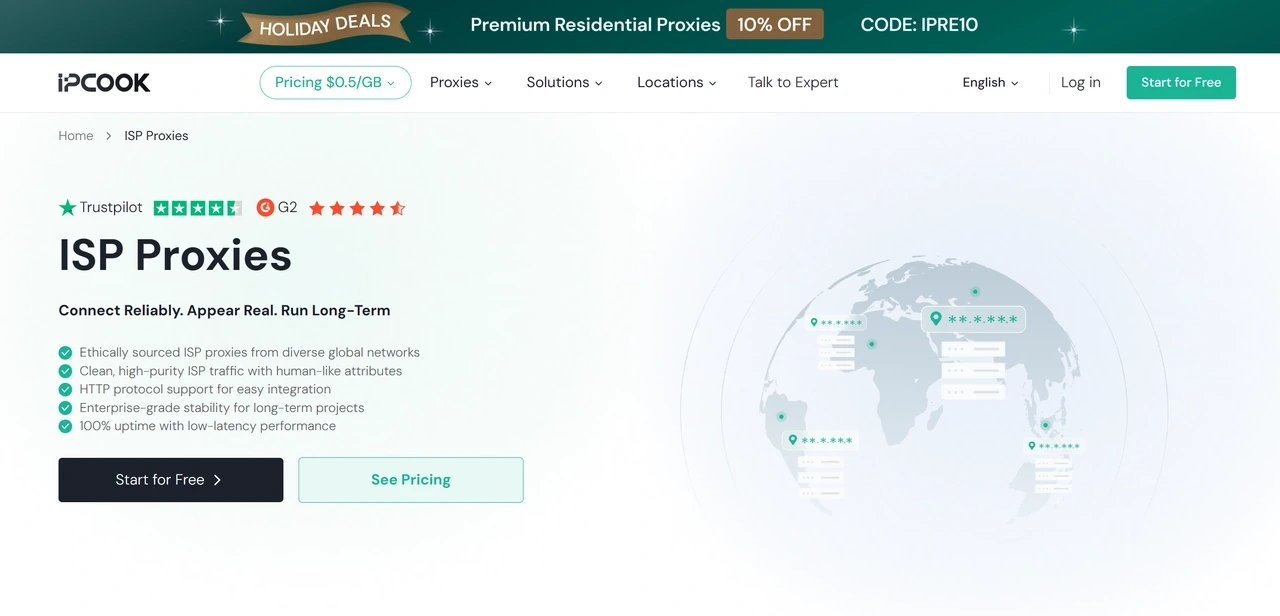
IPcook ISP Proxy fits long-term, multi-account LinkedIn management. With fixed, stable connections, you can keep the same setup over time. Unlimited traffic and global coverage help you organize accounts by region and scale with fewer interruptions.
Pricing starts from $0.05/IP, with lower rates at higher volumes.
Key IPcook ISP Proxy features for LinkedIn
Dedicated ISP IPs for account separation: Assign one fixed IP to each account so accounts stay separated and your workflow stays repeatable. When something goes wrong, it is easier to trace the cause.
Fewer blocks and verification checks: Dedicated ISP IPs can help reduce CAPTCHA loops and extra security checks that often appear on shared networks. Shared networks create more noise, which can trigger more reviews.
Coverage across key global regions: Access to major countries and regions supports location-based workflows, so you can group accounts by market and keep routines consistent.
Easy setup with clear control: Use standard credentials (IP:port:username:password) and a visual dashboard to track usage, manage IP assignments, and scale connections without extra overhead.
💡 Related Reading
Conclusion
Buying LinkedIn accounts can look like a shortcut, but it only works when you treat it as a risk decision, not an impulse purchase. That is why the safest approach is simple: choose the right channel, screen the seller carefully, and make sure you truly control the account the moment it is delivered.
After that, your day-to-day setup decides whether the accounts stay usable. Keep your environment consistent, keep accounts separated, and avoid shared networks that trigger random checks and interruptions. If you manage multiple accounts, using a dedicated IPcook ISP IP for each profile can help keep accounts safer and usable for longer.
- What Is a Verified LinkedIn Account?
- Why You Might Need to Buy Aged LinkedIn Accounts
- What Are the Real Risks of Buying LinkedIn Accounts in 2026?
- What Should You Check Before You Buy Verified LinkedIn Accounts?
- Where and How to Buy Verified LinkedIn Accounts in 2026
- How to manage multiple LinkedIn accounts with IPcook’s ISP Proxy
- Conclusion