How to Buy Amazon Aged Accounts Safely (2026 Guide)


Buying a new Amazon account is not the hard part. The hard part is waiting. You wait to look trustworthy. You wait to build a real record. You wait for the account to feel “normal” in Amazon’s eyes. If you want to move fast, that wait can kill your momentum.
That is why you may be thinking about buy Amazon aged accounts. An aged account can come with real history, so you do not start from zero. But it can also go wrong fast if the account has hidden issues or the handover is messy. In this guide, we will show you how to check an account before you pay, how to buy it safely, and what to do in the first two weeks, so it stays stable.
👀 Related Reading:
How to Scrape Amazon Product Data: A Step-by-Step Guide Without limits
How to Extract a Seller’s Entire Amazon Catalog: A Step-by-Step Scraping Guide
How to Scrape Amazon Reviews at Scale Without IP Bans or CAPTCHAs
What Are Amazon Aged Accounts?
Amazon aged accounts are not valuable just because they are old. They are valuable because they have a real track record you can verify. In simple terms, “aged” is about proof, not a birthday.
Here is a quick example. Two accounts can both be two years old. One was barely used, so there is almost nothing to judge. The other has steady, normal activity and clean details. They look similar on paper, but they are not the same in real life.
When you hear “aged,” think of a bundle of signals you can check, not just a creation date. That bundle usually includes sales record, feedback, category access, account health, verification details, and payout rhythm.
Why Buy Amazon Aged Accounts? The Key Advantages
Most buyers choose aged accounts for one reason: credibility. When an account already has a clean track record, it can feel like a faster, steadier starting point.
If you plan to buy an Amazon seller account, these are the advantages you are usually paying for:
Instant credibility and trust
Aged accounts often come with past sales and feedback. That can make the account look less like a fresh start and more like a store that has been active over time.
Fewer early unknowns
New accounts are watched closely and can feel unpredictable. An account with a clean history may come with fewer early surprises than one with no record at all.
Faster start on operations
With an established account, you can list products and start operating right away, instead of spending months building basic history from scratch.
Access to more categories
Some product categories require approval. An aged account may already have access to certain categories, which can save time and extra steps.
More predictable payouts
New sellers can run into slower payouts or extra holds. If an account already has a stable payout history, the payout rhythm can feel more predictable. Changes to banking or key details can still trigger reviews.
Less time lost on verification steps
New accounts can get slowed down by identity or business checks. An aged account may have some of these steps completed, though major changes can still trigger a new review.
Lower single point of failure, if you follow the rules
If you rely on one account and it gets paused, your revenue can stop overnight. Some businesses operate more than one account for separate brands or legal entities, but you must follow Amazon’s rules for multiple accounts.
These are common reasons people look for aged accounts. They only help when the account history is clean and the handover is handled carefully.
How to Buy Amazon Aged Accounts?
If you are looking to buy Amazon aged accounts, where you buy matters as much as the account itself. Price, support, and scam risk can be totally different depending on the channel. One rule never changes: prioritize verifiable history over any deal that sounds too good to be true. Here is how the four main channels stack up.
Broker or Agency
Brokers and agencies handle the whole handover. That can include paperwork, transfer steps, and a short support window after you take over. You will see names like AIA Assets and Premium Sellers come up a lot.
Why choose:
Clear steps, so you know what comes next.
Guided handover, so there is less room for mistakes.
Someone to talk to if something breaks during transfer.
What to watch for:
You are paying for service, so prices are higher.
Some listings oversell the account. Ask for proof such as performance screenshots, account status, and sales history. If they hesitate, do not proceed.
Marketplace or Forums
Marketplaces and forums offer more choice and more price competition. BlackHatWorld and AspKin are two names you will see often.
Why choose:
Huge selection across ages, niches, and price points.
Easy to compare multiple sellers.
What to watch for:
A good rating does not prove the account is clean.
Inflated history and hidden issues are common. Ask for a live screen share. Ask what support you get after transfer. If the seller gets evasive, walk away.
Social Media and Private Groups
Social channels can look convenient, but oversight is limited. Facebook groups, Reddit subs like r/AmazonSeller for research only, Discord servers, and Telegram channels all come up.
Why the risk is higher:
Fast deals and pressure like “someone else will buy it.”
High fraud rate, including fake listings and stolen credentials.
Tips for safe use:
Use these places for research and networking.
Do not send money without live verification and buyer protection. Treat direct deals with extra caution until you have proof.
Payment and Escrow Rules
No matter where you buy, protect yourself with a few strict rules:
Use payment methods with buyer protection and a clear trail
If you cannot trace it or dispute it, do not use it.
Avoid irreversible payments when proof is weak
If the seller pushes a no refund method, treat it as a red flag.
Require a written delivery checklist before you pay
At minimum, the checklist should cover login access, full recovery control, what history is included, the support window after transfer, and a written dispute process if key items are not delivered. Get it in writing before you pay. It should cover:
Login credentials and full recovery access
What history and metrics are included
The support window after transfer
A dispute process if key items are not delivered
If a seller refuses these basics, the deal is not worth the risk.
What to Look for When Buying Amazon Aged Accounts
When you look at aged Amazon accounts, do not get distracted by a label or one screenshot. Age only helps when the history behind it is real and clean. Use this checklist before you pay.
Account health and policy history
Ask if the account has any warnings, restrictions, reviews, or past appeals. Hidden policy history is risky because it can surface after you take over, when you cannot undo the deal.
Sales and activity history
Look for activity that feels normal, not perfect. Steady patterns are a good sign. Strange spikes, long dead periods, or gaps in the story are not. If you are checking aged Amazon buyer accounts, the same rule applies.
Feedback quality
Do not focus only on the score. Read the negative feedback and look for repeated themes like shipping, refunds, or authenticity. One bad review can happen. A pattern is the real problem.
Category approvals and feature claims
If the seller claims the account has category approvals, treat it as something that must be proven. Ask them to show it live in Seller Central. Do not pay for “ungated” access based on words alone.
Payout terms
Ask what the current payout schedule looks like and whether there have been recent holds. Also remember that big changes, like a banking update, can trigger reviews or delays.
Transfer control and verified business info
If you plan to buy an Amazon seller account, full control is not optional. You need full email control, full recovery access, and control of two factor authentication. Also confirm the business and identity details are real, consistent, and can be updated properly if needed.
Seller reputation and deal signals
A trustworthy seller is clear and consistent.
Red flags | Green flags |
Refuses live screen share | Willing to screen share live |
Rushes you to pay | Clear proof that matches the exact account |
Price makes no sense | A specific delivery checklist |
Story keeps changing | A short support window after transfer |
Refuses any written delivery checklist | Clear, consistent answers |
💡 Notice: Payment rule to keep you safe
Use a payment method that is traceable and allows disputes, such as PayPal Goods and Services or escrow. If the seller pushes a no refund method before showing proof, walk away.
How to Keep Bought Amazon Aged Accounts Alive
Many aged Amazon accounts get flagged in the first week because the changes look like a takeover. If you just buy an Amazon seller account and switch everything at once, you create a sharp pattern break. Use these three rules to keep your aged accounts stable.
Rule 1: Avoid Sudden Identity Changes
Do not rebuild the whole profile on day one. If you change business details, payout info, and login location at the same time, the account can look like it has a new owner.
Do this instead:
Keep the core profile steady for the first few weeks
Change one item at a time, then run normal activity in between
Try to log in from the same city and the same setup as much as you can
The goal is simple. Make the account look like business as usual.
Rule 2: Use One Consistent IP per Account
Frequent IP changes can trigger extra checks. Sharing one IP across multiple accounts can also create overlap, which is what you want to avoid.
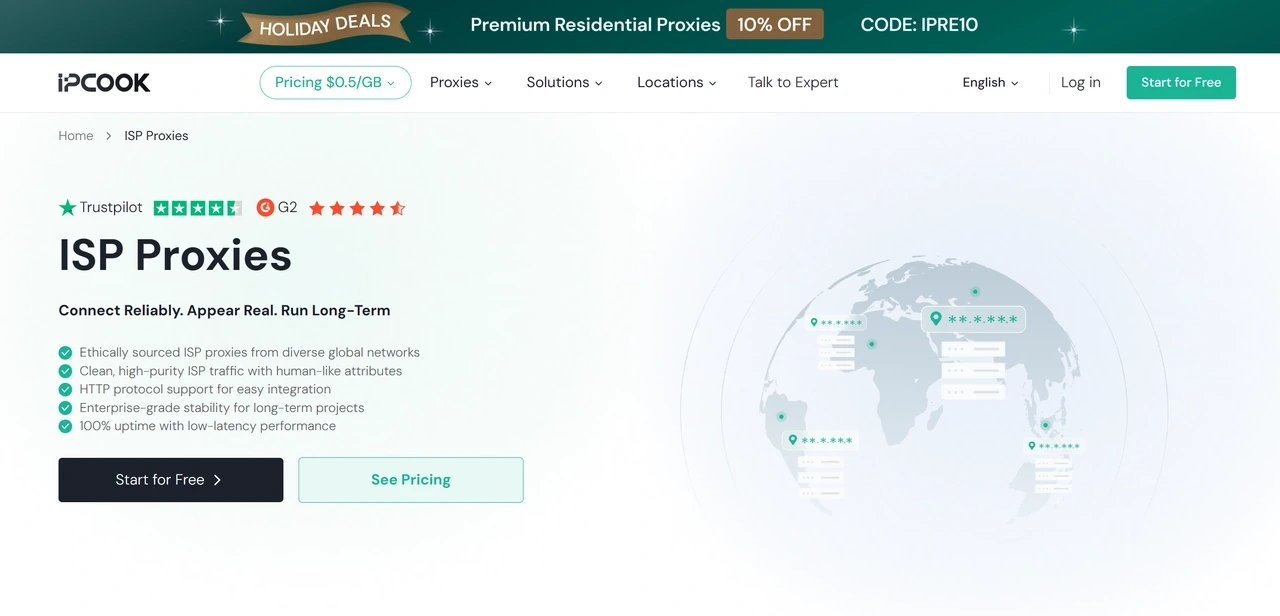
IPcook ISP Proxies give you static ISP IPs that stay fixed instead of rotating. This helps you keep one consistent network identity for each Amazon account across days and weeks, so routine actions like logging in, editing listings, updating inventory, and running ads look steady.
What you get with IPcook ISP Proxies:
Static ISP IPs that stay fixed for long-term use
Unlimited traffic for ongoing account maintenance
99.99% uptime for stable sessions
HTTP and SOCKS5 support for common tools and workflows
Key country coverage so you can match the market you operate in
Pricing starts from $0.05 per proxy, with better rates at higher volumes
How to apply it:
Assign one dedicated IP to one Amazon account.
Keep using that same IP for daily logins and ongoing work.
Avoid rotating unless you have a real reason.
Rule 3: Keep Behavior and Workload Gradual
Right after the handover, do not spike activity. Big jumps in listings, orders, or ads can look unnatural, even if the account is clean.
A safer ramp looks like this:
Start close to the account’s recent normal pace
Increase in small steps, not in one big push
Check the account health dashboard daily for warnings or new prompts
Here is a simple example. If the account used to add five listings a day, do not add fifty on day one. Add five, then eight, then ten over time. Slow growth looks normal. Sudden growth gets attention
Conclusion
Buying Amazon aged accounts can speed up your start, but only if you treat it as a risk decision. Choose the right channel, verify the history, and take full control at delivery. After that, keep identity changes gradual, keep activity steady, and avoid shared or unstable networks that trigger extra checks.
If you want one account to run on one fixed network identity, use a dedicated ISP IP for each account. A stable ISP proxy from IPcook helps reduce verification and keeps long term operations smoother.