







Netherlands Proxies
Trusted Netherlands Proxies with Fast and Secure Access
- 70,542+ residential and ISP IPs across the Netherlands

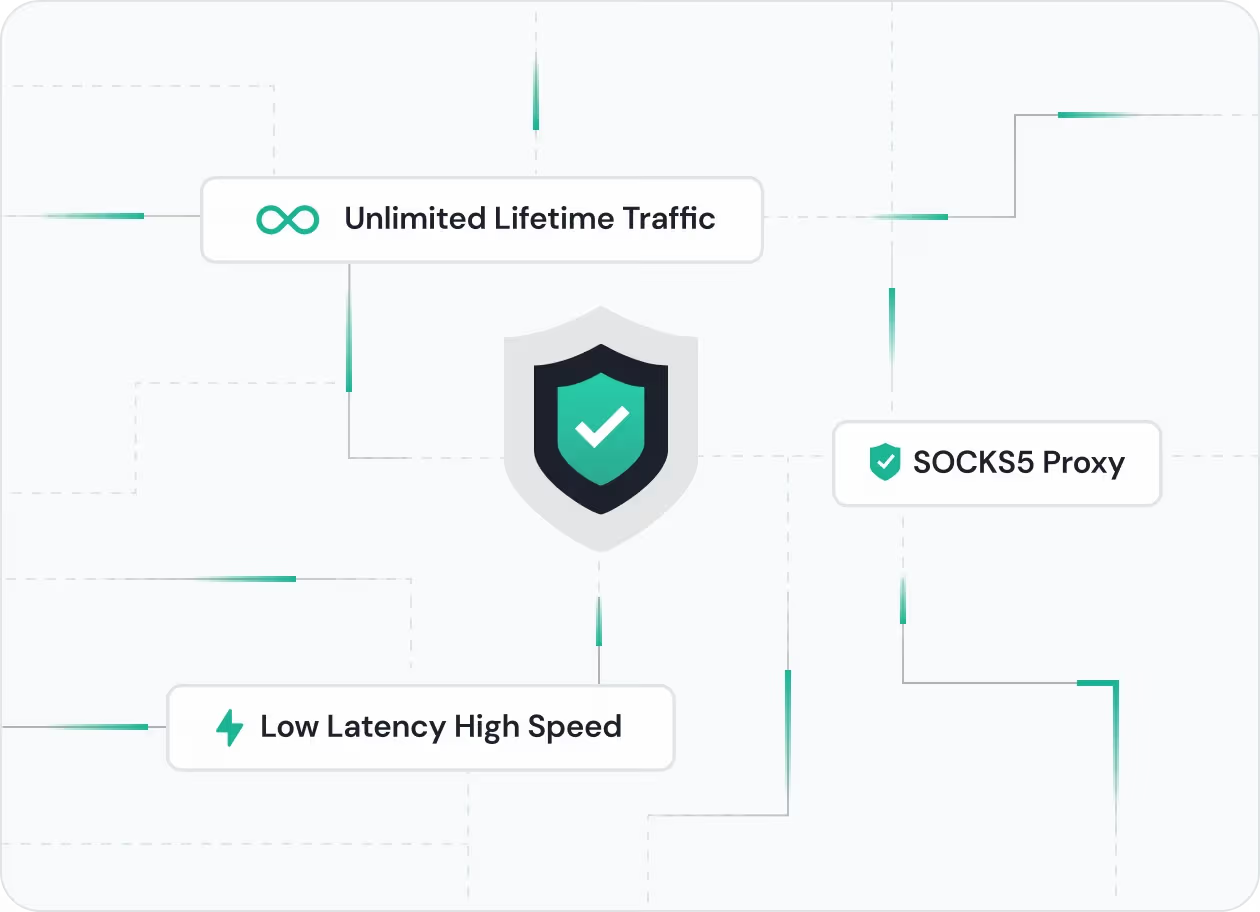
- HTTP & SOCKS5 compatibility for flexible proxy integration
- Smart IP rotation and free city-level targeting
- Verified and clean IPs for web scraping & account management
Proxies can’t be used when located in: North Korea, Turkmenistan, Iran, Eritrea, China

Netherlands Proxies





Why Use IPcook for Netherlands Proxy Solutions
Get Localized Access to Dutch Search and Market Data
Whether you are monitoring prices on Dutch e-commerce platforms, researching local competitors, tracking Google rankings, or verifying ads in the Netherlands, reliable local IPs are essential. IPcook Residential Proxies provide 70,542+ Netherlands rotating IPs with sticky sessions up to 24 hours. This helps handle high-volume scraping while reducing IP repetition. The city-level targeting feature is also supported to help you collect accurate data from specific Dutch locations.
For businesses managing Netherlands-focused social media accounts or running local e-commerce stores, IPcook ISP Proxies offer fast and stable connections for consistent daily operations. It is also a cost-effective option for multi-IP purchases, with pricing starting from $0.05/IP.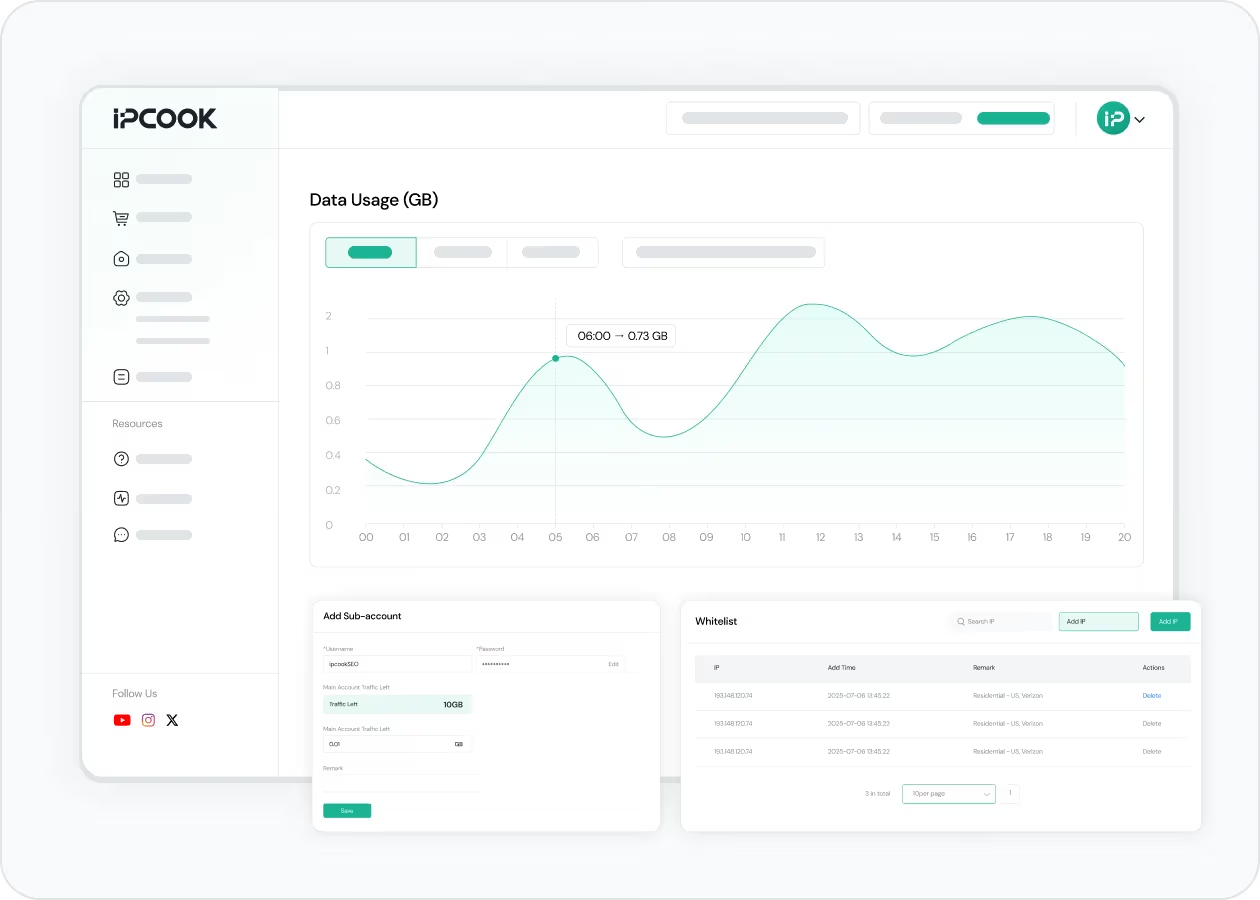
Manage Your Netherlands Proxies with Ease
IPcook makes it easier to manage Netherlands proxies across teams and projects. Create up to 10 sub-accounts to give team members or clients separate access, without sharing your main credentials. IP whitelisting adds another layer of control over proxy access.
Backed by 99% uptime and response times < 0.5 seconds, IPcook delivers stable connections for demanding workflows. With HTTP & SOCKS5 support, plus usage tracking and API proxy export, you can integrate and manage your proxy resources with less manual work.
What Makes IPcook Netherlands Proxies Different
- Feature
- Real Residential IPs
- Global Pool Size
- Rotation Control
- Uptime
- Setup Time
- Support
- IPcook
- Yes
- 55M+ IPs
- Sticky/rotating
- 99.99%
- < 5 mins
- 24/7 Human Support
- Others
- Mixed sources
- Limited in scope
- Often limited
- Varies
- Complex setups
- Chatbots or email delays
Netherlands Proxy Pricing: Simple Pay-As-You-Go Plans
- ISP Proxies

Ultra-stable · Long-term sessions
Starts from
$0.05/IP
- Unlimited Traffic
- 99.99% Uptime
- HTTP & SOCKS5
- Global locations
- Top choice
 Residential Proxies

55M+ Real user IP pool · Rotating
Starts from
$0.3/GB
- Traffic never expires
- Stick time up to 24h
- HTTP & SOCKS5
- Free geo-targeting
- Unlimited Residential

100-9900 Mbps · Light scraping
Starts from
$11.67/DAY
- Unmetered traffic
- Rotation & sticky up to 24h
- HTTP & SOCKS5
- 55M+ real residential IPs
- Datacenter Proxies

Fast & scalable · For bulk scraping
Starts from
$0.04/IP
- Unlimited Traffic
- 99.99% Uptime
- HTTP & SOCKS5
- Global locations
Not sure which to choose?
Talk to our
How to Configure Your Netherlands Proxy
- 1
Customize Your Proxy Parameters
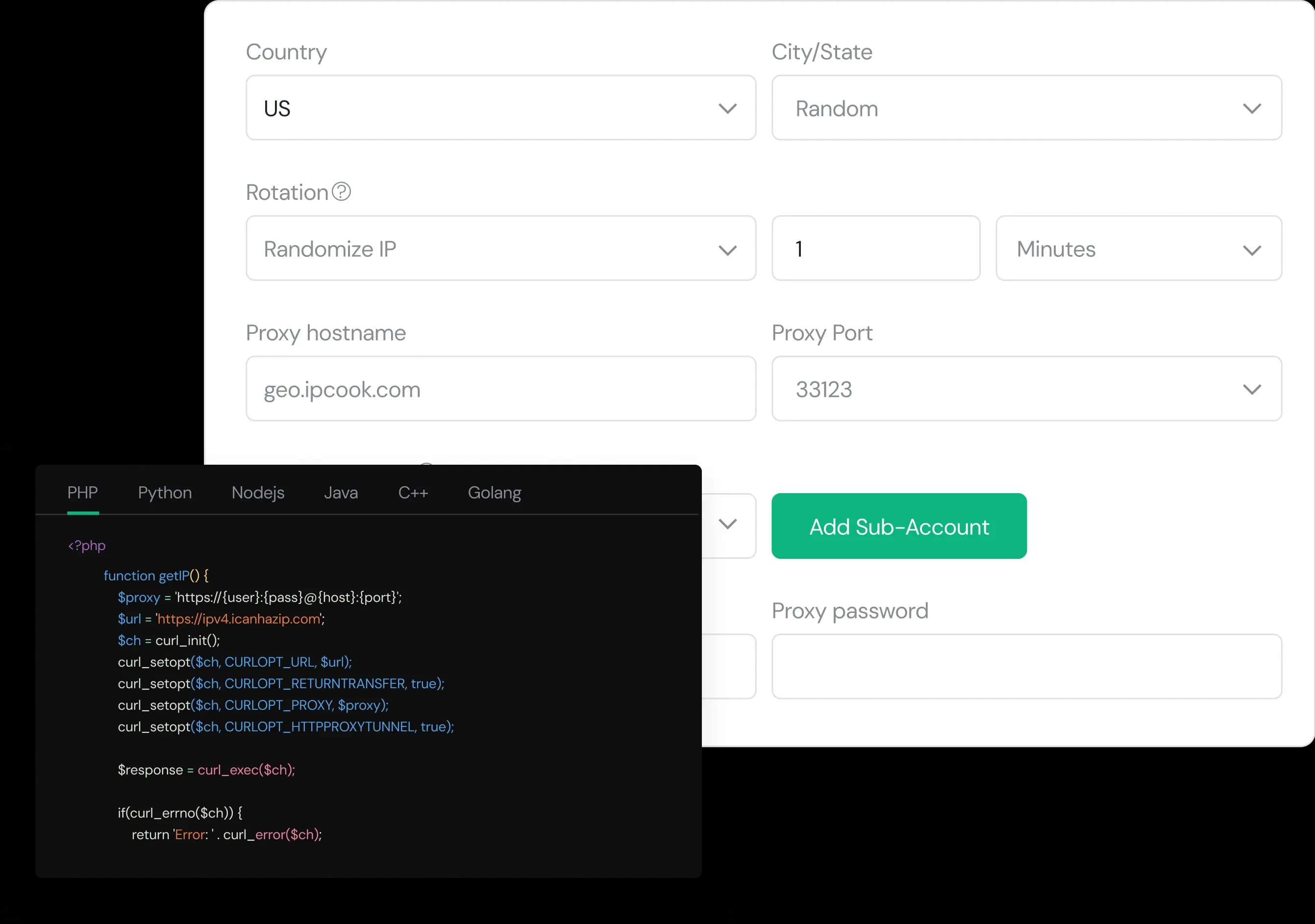
Configure your proxy by selecting the country, city, protocol, and rotation type, then assign a sub-account, set login credentials, and optionally add whitelisted IPs.
- 2
Generate Proxies Instantly
Select the desired proxy format (e.g., host:port:user:pass) and quantity, then generate your proxy list by clicking Generate or Generate API Link.
- 3
Plug into Your Stack in Minutes
Copy the code snippet for your preferred language (Python, Node.js, PHP, Java, Golang, or C++), then paste it into your application to start using the proxies.