Discord IP Ban: Why You’re Still Blocked and How to Fix It

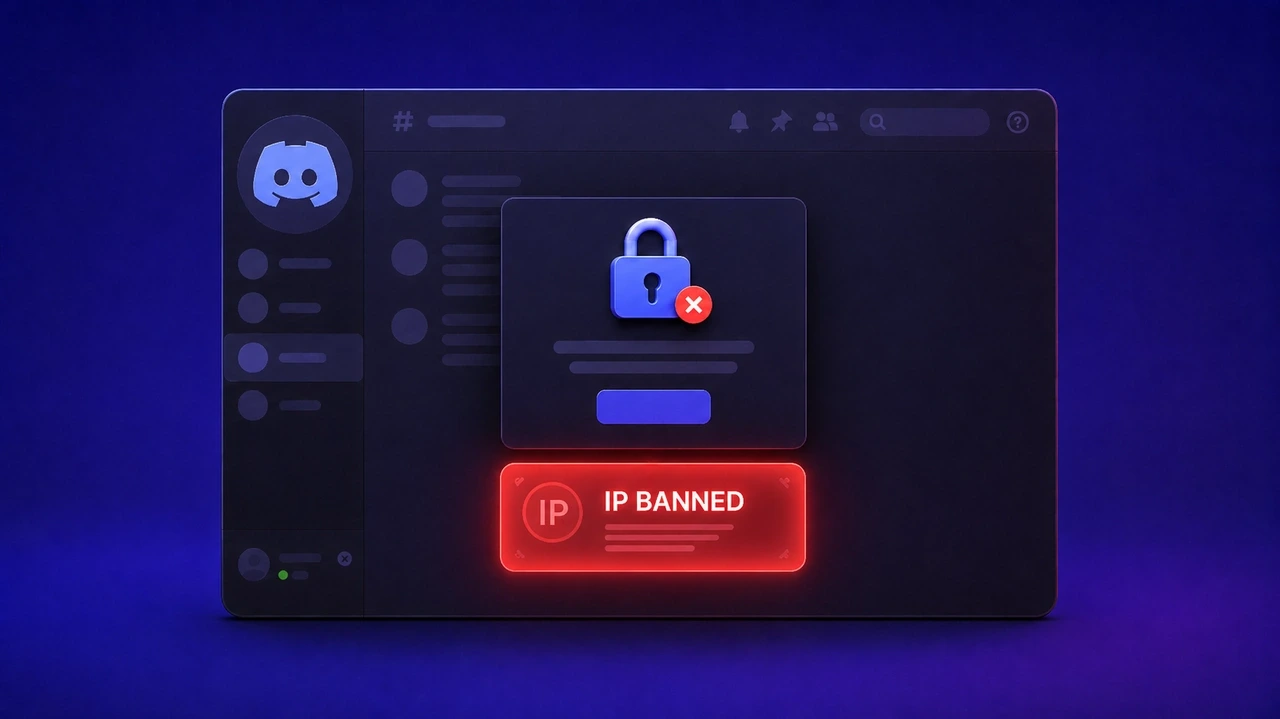
Discord started as a place for gamers, but now it is where people run communities, manage customer groups, join private servers, and talk with friends every day. But getting locked out cuts you off from those spaces entirely.
Whether you buy new Discord accounts or create new one, it may not help. Reinstalling the app may not help either. If the ban is tied to your IP address, every device on the same Wi-Fi can still run into the same block. This guide covers how Discord IP bans actually work, how to check if you have one, and which fixes can help you get back online.
Why Does Discord Ban IPs? How does it work
Discord does not jump straight to IP bans for every minor violation. Most enforcement starts at the account or server level, then gets stricter when the behavior is serious, repeated, or looks like ban evasion.
Here is how Discord enforcement usually escalates:
Enforcement action | What it means | How serious |
Warning or message removal | Discord removes the offending content and may notify the user. Access is usually not restricted. | Low |
Temporary account ban | Your account may lose access to certain features or be suspended for a set period. | Medium |
Permanent account ban | Your account is disabled, and you lose access to the servers, friends, and messages tied to that account. | High |
IP ban | Discord blocks or limits activity coming from your IP address. Other accounts or devices on the same Wi-Fi may also run into problems. | Very high |
Device ban | Discord may still recognize the same device, app data, browser profile, cookies, or session patterns even after you change accounts or IPs. | Very high |
An IP ban is one of the platform's most aggressive enforcement tools, usually reserved for serious or repeated violations. It's meant to stop ban evasion at the source. If Discord only banned your account, you could just make a new one.
Why Discord Issues IP Bans
Discord uses IP bans or network-level restrictions to protect the platform, servers, and users from repeated abuse. A normal mistake usually will not lead to an IP ban. The most common reasons include:
Hate speech, harassment, or abusive behavior
Spamming across servers or users
Exceeding rate limits or exhibiting bot-like behavior
Repeated Terms of Service violations
Ban evasion attempts, such as creating new accounts after previous bans
Using unauthorized automation tools or self-bots
Posting illegal or dangerous content
How Discord Enforces IP Bans
This is where a lot of users misunderstand what's happening. An IP ban isn't just a block on your address. It's a multi-layered enforcement system.
When Discord bans your IP, any request coming from that address is rejected at the login stage. You can't access the platform, period. But Discord doesn't stop at IPs alone. The platform also collects and tracks:
Device fingerprints: Your hardware setup, operating system, screen resolution, installed fonts, and browser type create a unique signature.
Browser data and cookies: Stored tokens, session data, and cached files can link you to previously banned activity.
Phone numbers and emails: Permanently banned accounts may also leave phone numbers or emails flagged.
Behavior patterns: Joining the same servers, repeating the same actions, or creating accounts too quickly can make a new account look connected to the old one.
This is why a simple approach often fails. You swap your IP with a free VPN, but Discord still recognizes your device. Or you clear your browser cookies, but your hardware fingerprint gives you away.
What Happens When You're IP Banned
If you're reading this, you probably already know the symptoms. But let's make sure you're dealing with an IP ban and not something else.
When Discord imposes an IP ban, here's what you'll experience:
You can't access Discord from your regular internet connection. The app won't load, the website returns errors, or you get stuck on a blank screen.
Every account on your network is blocked. Even accounts in good standing can't log in from that IP. New accounts may also fail on the same Wi-Fi.
Creating a new account from the same IP fails. Discord rejects the signup attempt.
If your account was permanently banned and had a phone number attached, that number is likely blacklisted too.
This affects everyone using your connection. Roommates, family members, or colleagues on the same Wi-Fi all lose access.
Is It Really a Discord IP Ban?
If you got banned from a Discord server, made a new account, and still can't join, the question changes from "was my account banned?" to "am I dealing with a Discord IP ban?"
Not every ban is an IP ban. Let's sort out what you're actually dealing with.
Does Discord IP Ban Users or Just Server Ban Accounts?
Discord applies different levels of enforcement depending on the situation. Here's the key distinction:
Account ban: Only affects that specific account. Your IP and other accounts remain untouched. You might get this for a first-time violation or a server-specific issue.
IP ban: Affects all activity from your IP address and often your device fingerprint. This is reserved for more serious cases. Repeat offenders, ban evasion, or severe Terms of Service violations typically trigger this level.
Most bans are account-level. If you received an email from Discord saying your account was disabled but you can still browse the platform from a new account on the same network, you likely only have an account ban.
Can You Be IP Banned From a Discord Server?
No. Individual server admins and moderators cannot issue IP bans. A normal Discord server admin usually bans accounts, not IPs directly. Their powers are limited to:
Banning accounts from their specific server
Kicking users
Reporting behavior to Discord's Trust & Safety team
Only Discord itself can impose a platform-wide IP ban. If a server admin tells you they "IP banned" you, what they really mean is they banned your account from their server and possibly reported you. The actual IP-level action, if any, comes from Discord.
So if you're locked out of one server but can still use Discord normally elsewhere, you don't have an IP ban. You just got kicked from a community. From the user side, though, it can still feel like an IP ban. Either way, if you can't access the platform at all, you need a new IP. A service like IPcook can be especially effective, providing stable and anonymous connections for uninterrupted access to Discord.
How to Check If You're IP Banned on Discord
Here's a quick diagnostic checklist. Run through these tests. If Discord works on mobile data but fails on your home network, you're almost certainly dealing with an IP ban.
Test | What It Tells You |
Try logging in from a different device on the same Wi-Fi | If no device works, likely an IP ban |
Switch to mobile data, turn off Wi-Fi and try again | If mobile data works, confirms IP ban on your home or office network |
Check your email for a "Your account has been disabled" message | If you received one, your account is banned. May or may not include an IP ban |
Try Discord in a clean browser profile | If it works there, old cookies, cache, or browser data may be part of the issue |
Can access Discord but only certain servers are missing | You were server-banned or kicked, not IP banned |
Can't connect at all, no error message, just blank screens or timeouts | Classic IP ban symptom |
How to Fix and Bypass a Discord IP Ban
Before you start, make sure you're dealing with an IP ban and not a server kick or account suspension. If you haven't already, run through the checks in the section above. Once you know the IP is the problem, here's how to fix it and get back on Discord after an IP ban.
Step 1: Change Your IP Without Third-Party Tools
Some IP bans resolve by simply getting a new public IP from your internet provider. Try these first:
Restart your router. Unplug it for 5–10 minutes, then reconnect. Most ISPs assign dynamic IPs that change on reboot.
Switch to a mobile hotspot. Your phone's cellular data uses a different IP than your home network. If Discord works there, your home IP is the issue.
Contact your ISP. If a router restart doesn't rotate your IP, ask your provider to assign a new one.
If any of these work, skip to Step 3. If your IP stays the same or your ISP won't rotate it, Step 2 covers a more reliable fallback.
Step 2: Get a Clean IP Through a Residential Proxy
Free VPNs and public proxies are often shared by too many people, which means Discord may treat them as suspicious before you even log in. Residential proxies use IPs assigned by real internet service providers, so your connection looks like a normal home user rather than a shared server. That signal matters because Discord flags known proxy ranges and unnatural traffic patterns, while a residential IP blends into everyday traffic and reduces the chance of getting flagged again the moment you log in.
IPcook provides clean residential proxies backed by real ISP networks, with optimized routing and 99.99% uptime for a more consistent Discord experience. With verified residential IPs and coverage across 185+ countries, IPcook keeps your connection steadier and less exposed to the risks of shared IPs.
Rotating residential proxies: 55M+ IPs with city-level targeting, HTTP/SOCKS5 support, and sticky sessions up to 24 hours. They work well for getting a clean residential IP, testing different locations, or starting a fresh Discord session. They can assign a new IP when needed, helping you avoid overusing one address.
Static residential (ISP) proxies: Fixed, verified IPs from real internet service providers across key regions including the US, CA, DE, GB, FR, JP, and VN. They are a better fit for long-term Discord sessions that need a stable identity, trusted access, and static connections.
For step-by-step help from getting your proxy IPs to setting them up across different devices and browsers, see our full configuration guide.
Step 3: Clean Your Local Discord Environment
Changing your IP helps, but old app data can still connect your new session to the old one. Before logging in again, close Discord completely and clear its local cache.
On Windows, close Discord first, then open:
%AppData%\DiscordDelete these folders if they appear:
Cache
Code Cache
GPUCache
On macOS, close Discord and open:
~/Library/Application Support/DiscordDelete the same cache-related folders:
Cache
Code Cache
GPUCache
Step 4: Reinstall Discord or Use a Fresh Browser Profile
After changing your IP and clearing local data, start with a clean login environment.
Uninstall Discord completely, then reinstall the latest version from discord.com. If you prefer the browser version, create a fresh browser profile instead of reusing old cookies, extensions, or saved sessions.
If you manage multiple accounts, an antidetect browser like AdsPower can help keep each profile separated with its own browser fingerprint, cookies, and proxy settings.
Create a new account with a new email address. If Discord asks for phone verification, use a phone number not already tied to the blocked account.
Log in while connected to your new IP and keep it stable. A sticky residential IP or ISP proxy works better than constantly rotating IPs during login and verification.
Avoid reusing old account signals, such as the same email, phone number, browser profile, or cookies.
Step 5: Appeal If the Block Isn't IP-Related
If the issue is an account ban, account-disabled notice, or server-level ban, changing your IP alone may not solve it.
Account appeals: Contact Discord Support through the official appeal page. Include your username, the email linked to your account, and a clear explanation of what happened.
Server bans: Reach out to the server admin directly. Server admins control bans inside their own communities, so Discord Support usually cannot remove a server-level ban for you.
Appeals work best when the ban was a mistake, caused by unusual activity, or triggered by a misunderstanding. If your old account cannot be recovered, start fresh with a clean setup, stable IP, new account details, and safer account behavior.
👀 Need to bypass an IP ban on another platform? These guides can help:
How to Fix a Roblox IP Ban and Restore Access Fast
Strategies to Avoid Discord IP Bans
Most Discord IP bans are preventable if you keep accounts separated, use clean IPs, and keep your activity natural. Here are a few strategies that help:
Don't run too many accounts from one IP. If Discord sees several accounts operating from the same address, it can look like ban evasion. Assign each important account its own dedicated proxy to keep them separated.
Stay away from free VPNs and public proxies. They're often shared, abused, or already flagged. Connecting through a dirty IP can get you banned before you do anything wrong.
Be aware of shared network history. School Wi-Fi, office networks, and public hotspots may already carry flags from someone else's activity. You might walk into a ban you didn't earn.
Avoid spam-like behavior. Rapid messages, mass invites, and repetitive actions trigger anti-spam systems even if you're a real person. Keep your activity natural.
Be cautious on large public servers or newly joined communities. Mass reports, strict moderation, and unusual activity spikes can put your account under more review.
Follow the rules. Read each server's guidelines and Discord's Terms of Service. Avoiding behavior that looks abusive, automated, or disruptive is the simplest way to stay online.
Conclusion
A Discord IP ban can cut you off from your favorite servers and communities, and changing accounts alone usually won’t fix it. A cleaner IP, cleared local data, and a fresh login setup give you a better chance of getting back online.
To stay online, keep your activity natural, follow Discord and server rules, and avoid free proxies or unreliable VPNs. For a more stable experience, IPcook’s clean proxies help you stay connected without interruptions.