In-Depth Geonix Review: Use Cases, Pricing, and Best Alternatives


Suddenly, Geonix is everywhere: on review platforms, testing sites, proxy comparison lists. But you might know it by a different name: proxy-sale. A rebrand this loud always raises one question: Is the infrastructure really upgraded, or is it just new packaging for the same old backbone?
This review goes straight past the feature list. We put Geonix to work in the scenarios that actually break weak proxies: web scraping at scale, SEO rank monitoring across regions, and multi-account management that can’t afford IP bans. We also stacked it side-by-side with its closest alternatives. By the end, you’ll know if Geonix is a long-term keeper or just a familiar face in a new suit.
What Is Geonix and Who Is It Really Built For?
To save you time, let’s start with a side-by-side comparison of strengths and weaknesses, so you can instantly tell if Geonix fits your core needs.
Pros | Cons |
Pure Private Proxy | Small IP Pool |
Precise Geolocation | Complex Setup |
Multiple Proxy Types (Residential, ISP, Mobile, Datacenter) | Unintuitive Dashboard |
Pay-As-You-Go Pricing |
Geonix offers four proxy network options:
Residential Proxies: Use real home internet connections from users worldwide. They have a high level of trust and support IP rotation. These proxies are ideal for tasks that require frequent IP changes to bypass security restrictions.
ISP Proxies (Static Residential Proxies): Combine ISP-assigned IP addresses with server infrastructure. They deliver high-speed performance while maintaining the appearance of a residential connection. They also provide stable sessions with very low interruption rates.
Mobile Proxies: Connect directly to dynamic IP pools provided by major mobile carriers. Since many real mobile users share the same carrier IPs, websites find it much harder to detect or block this traffic.
Datacenter IPv4 & IPv6 Proxies: Provide stable and dedicated hosting environments. IPv4 offers broad compatibility with websites and applications. IPv6 provides a much larger IP pool, making it a cost-effective option for large-scale data collection.
Users who need online anonymity and IP masking are Geonix's core audience. Data engineers and scraping teams use residential proxies for data collection. Social media managers rely on ISP and mobile proxies to manage multiple accounts safely. SEO specialists and ad verification teams use global IP locations to accurately assess search rankings and ad performance.
🤔Struggling to Find a Geonix Alternative?
If you need a professional proxy that's cheaper than Geonix yet offers enterprise-level stability, consider IPcook. A free 100MB trial is available now to get you started quickly!
Where Geonix Performs Well
Private Proxies
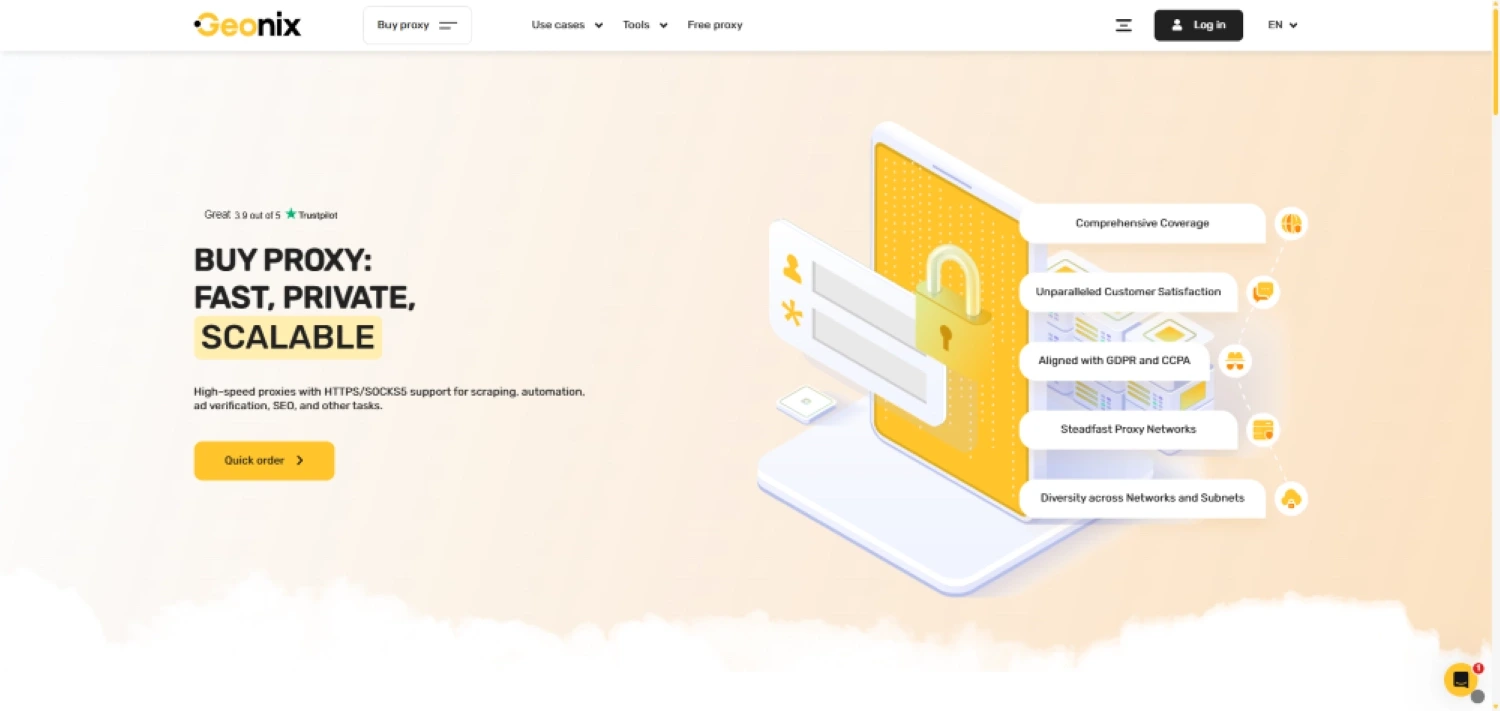
Geonix offers several types of dedicated IP resources. It optimizes these resources for specific workflows like web scraping, e-commerce, and social media. This dedicated isolation mechanism eliminates the risk of IP bans imposed by other users in shared proxy pools. It helps businesses maintain a high connection success rate as they scale projects. Using this specific Geonix IP resource can significantly lower the chances of network interruptions during your tasks.
Geo-targeting Accuracy
Geonix offers coverage in more than 210 countries and supports location targeting at the country, state, city, and ISP levels. Backed by over 400 networks and 1,000 subnets, the platform provides strong geographic flexibility for users who need location-specific IPs.
Multiple Proxy Types Support
The platform supports Residential, ISP, Mobile, and Datacenter IPv4 / IPv6 proxies. Users can combine these proxies according to specific tasks. This flexible architecture allows technical teams to adjust their network plans based on different anti-scraping limits. Running multiple proxy types in one system can greatly improve data collection success rates.
Pay As You Go
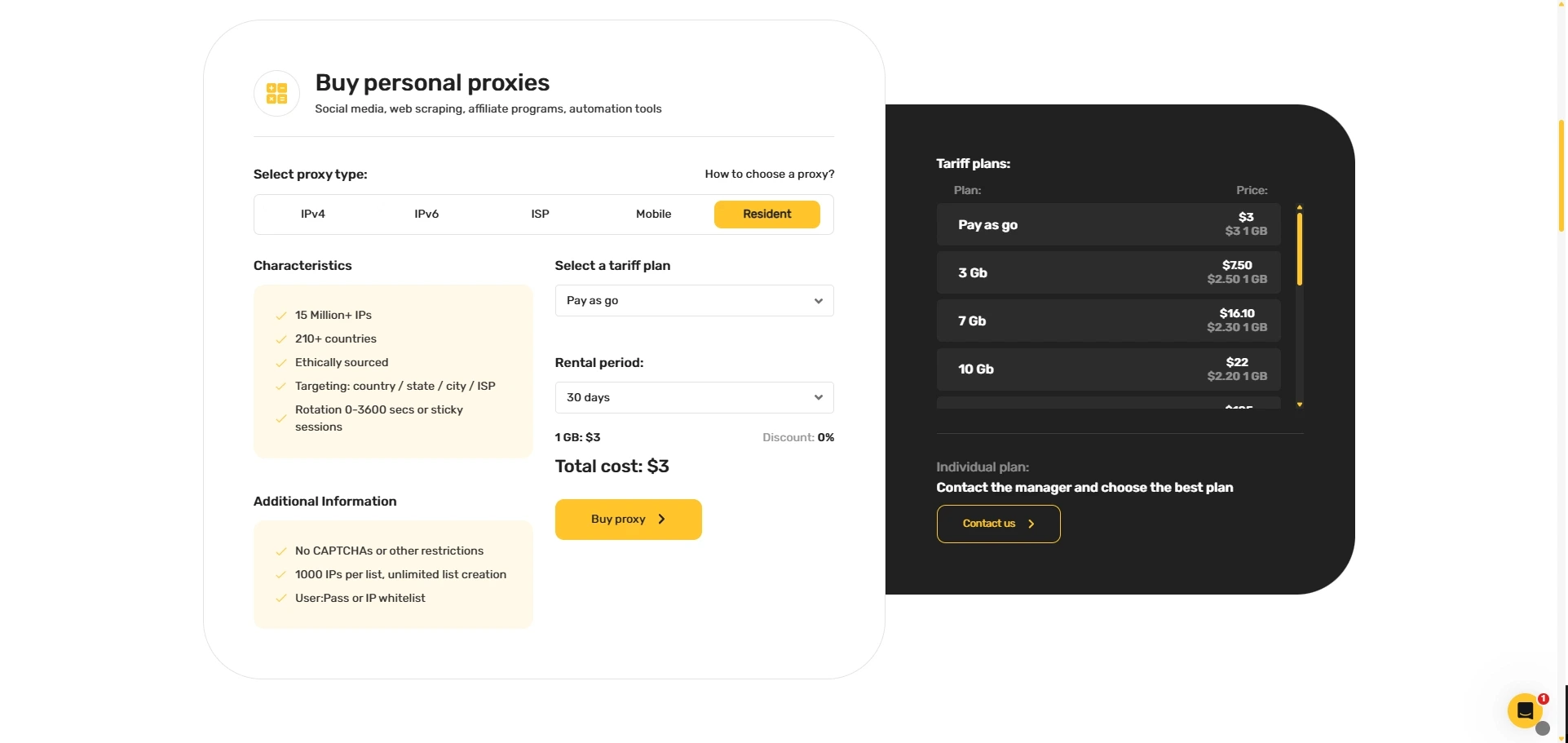
Geonix proxies can be purchased on demand. It offers pay-as-you-go traffic plans and short-term rental options. This helps businesses control their costs effectively. Specifically, residential proxies start at $7.50 per month with 3 GB traffic. ISP proxies start at $1.35 for 1 IP for 7 days. Mobile proxies start at $14 for a 2-day rental. IPv4 proxies start at $0.79 for 1 IP for 7 days. IPv6 proxies start at $1.40 for 10 IPs for 7 days.
Where Geonix Falls Short
Small IP Pool Size
Official data shows its global residential proxy pool is over 15 million, which is relatively small. If your business requires 24/7 high-concurrency web scraping, a small IP pool can lead to duplicate IP nodes. This increases the chance of being flagged by anti-scraping algorithms.
Complex Setup
The setup and onboarding process of Geonix is considered complex by some users. When purchasing datacenter or mobile proxies, users must select a specific country before they can see the pricing page. This increases the steps required. Users without professional network knowledge may spend a long time configuring and debugging.
Unintuitive Dashboard
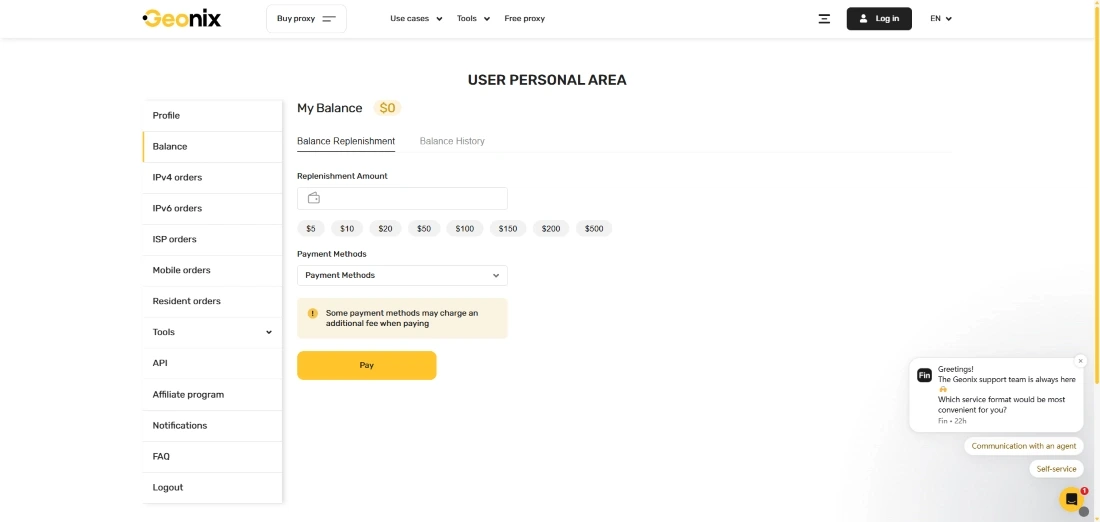
The control panel design is highly technical. For non-technical marketing operators, finding specific features or configuration details is not intuitive. Users often have to click through complex multi-level menus to renew IPs or change locations. This interface design reduces daily operational efficiency.
How Geonix Performs in Real Use Cases
Let us look at how Geonix performs in actual business scenarios. We will focus on what problems Geonix can solve and why users choose it. We will also discuss the limitations you might face during real-world usage.
Web Scraping and Public Data Collection
Web scraping users often need rotating residential proxies. Multiple regional IPs help bypass geo-restrictions for public data collection. Geonix performs well in this scenario. Its rotating proxies help reduce the risk of access blocks. Meanwhile, its sticky sessions provide stable connections for tasks that require a logged-in state.
From a user experience perspective, it might not be the best choice for high-concurrency massive scraping. Since residential proxies charge by traffic volume, your costs will rise very quickly.
SEO Monitoring and Local Rank Tracking
SEO teams need IPs from different countries and cities. Tasks like local keyword rank monitoring, SERP checking, and regional ad verification require real local access. Without genuine regional IPs, search engines will not show you the accurate local results.
Geonix provides great practical value for these tasks. It supports IPs across multiple countries and regions. This makes local SEO and ad monitoring much more convenient and accurate. However, if you need a much larger IP pool for global monitoring, you might want to look at providers like Oxylabs or Bright Data.
Multi-Account Management and Social Media Workflows
Long-term social media management relies heavily on session consistency and login stability. This is where ISP proxies and mobile proxies show their advantages. These proxy types are much better for maintaining long-term login states and stable account environments.
Geonix performs very well in terms of connection stability. However, it is a highly technical platform. Therefore, the learning curve might be slightly higher for regular social media operators. If you need affordable IPs for account management, you should consider Webshare or IPcook ISP proxies.
Ad Verification and Geo-Based Testing
Ad teams need real local access capabilities for their daily operations. This is because ad displays, regional content, and local landing pages often change based on the visitor's IP location. Using a local proxy is the best way to see what real users see.
Geonix's precise geo-targeting and sticky session features are extremely helpful for ad verification. It is highly suitable for local page testing and checking regional content compliance.
🤔Related Reading
Geonix 4 Types of Proxies Pricing Plan
Geonix offers different pricing plans and packages based on the proxy type. The rental period and package sizes of various proxy services are very flexible to meet different project budgets. The detailed package structure and starting prices are listed in the table below. Users can choose the most cost-effective plan according to their business cycle and usage.
Proxy Type | Plan Size | Total Price | Unit Price | |
Residential | 1 GB | $3.00 | $3.00/GB | |
3 GB | $7.50 | $2.50/GB | ||
7 GB | $16.10 | $2.30/GB | ||
10 GB | $22.00 | $2.20/GB | ||
ISP | 10 IP | $24.84 | $2.48/IP | |
20 IP | $41.58 | $2.08/IP | ||
50 IP | $99.90 | $2.10/IP | ||
100 IP | $191.70 | $1.92/IP | ||
Mobile | 10 IP | $24.84 | $2.48/IP | |
20 IP | $41.58 | $2.08/IP | ||
50 IP | $99.90 | $2.10/IP | ||
100 IP | $191.70 | $1.92/IP | ||
Datacenter | IPv4 | 10 IP | $15.67 | $1.57/IP |
20 IP | $30.36 | $1.52/IP | ||
50 IP | $66.00 | $1.32/IP | ||
100 IP | $123.75 | $1.24/IP | ||
IPv6 | 10 IP | $1.40 | $0.14/IP | |
20 IP | $1.96 | $0.10/IP | ||
50 IP | $4.90 | $0.10/IP | ||
100 IP | $7.00 | $0.07/IP | ||
Geonix provides free proxy trials, but these free nodes do not have anonymity features. Mobile proxies, IPv4/IPv6 proxies, and ISP proxies charge different fees depending on the region. For example, buying mobile proxies in Bangladesh starts at around $23 for 2 days, while buying mobile proxies in the US starts at around $14 for 2 days. Users must consider these regional cost differences when planning their project budget.
Better Alternatives to Geonix
The basic performance of Geonix proxy products is very stable, but there is still room for improvement in usability and pricing for some nodes. Many users are looking for cost-effective and easy-to-use alternatives.
Webshare and IPcook are both popular choices in the proxy market. Among them, IPcook stands out for its high success rate and fast response speed, making it a great fit for lightweight tasks and startup teams. It also offers a global residential IP pool that is nearly four times larger than Geonix's, with clean and continuously refreshed IPs. This helps reduce IP reuse rates and improves resistance to blocks and bans.
In terms of usability, IPcook provides an intuitive visual dashboard that allows users to configure proxies and monitor traffic with just a few clicks. The platform is easy to use, even for beginners. If you'd like a deeper look at its features and performance, check out our detailed IPcook review.
To help you make an intuitive choice, we compare Geonix's real-world performance test data directly with those of alternative solutions.
Quick Comparison: Geonix vs IPcook vs Webshare
Dimension | Geonix | IPcook | Webshare |
Pricing (Residential proxies) | Starts from $0.7/GB (30 days) | Starts from $0.5/GB (traffic never expired) | Starts from $1.4/GB (monthly) |
Connection Performance | 99.00% | 99.99% | 99.70% |
Response Time | ~0.8s | <0.5s | 1.0 to 2.8s |
IP Pool Size | 15M+ | 55M+ | 80M+ |
Dashboard Usability | ⭐⭐⭐⭐ | ⭐⭐⭐⭐⭐ | ⭐⭐⭐⭐⭐ |
📢Need a Geonix alternative right now?
Grab your exclusive 100MB FREE traffic right now. Join us and start testing instantly!
Final Verdict
Geonix provides dedicated IP resources and supports location targeting at both the city and ISP levels. It helps solve many common challenges in international operations, especially good fit for web scraping and public data collection, SEO monitoring and local rank tracking, multi-account management, social media operations, and ad verification.
However, it also has some limitations. Its IP pool is relatively small, the setup process can be complicated, and the dashboard may take time to learn. If you need a larger IP pool, a simpler user experience, and faster deployment, IPcook is a strong alternative. It can also help you reduce daily operating costs. IPcook offers a free 100 MB trial and low-cost 1 GB traffic plans for new users.