








5 Best IPRoyal Alternatives in 2026: Pricing & Features

IPRoyal covers a range of proxy needs, from residential browsing to large-scale scraping. But no single provider is the right fit for every project. You might be looking for more affordable traffic, better IP filtering, built-in scraping tools, or simply a different way to manage your proxy connections.
If you're considering a switch, 5 IPRoyal alternatives are worth a look: IPcook, Oxylabs, Webshare, Decodo, and NodeMaven. This comparison covers their pricing, features, and key differences to help you find the right fit.
📚Related Review
Read our detailed IPRoyal Proxy Review for an in-depth look at its features, pricing, performance, and limitations before exploring alternative providers.
How to Choose the Right IPRoyal Alternative
The right proxy provider depends on your project requirements, expected traffic, and existing tools. Before switching from IPRoyal, compare the following factors:
Proxy Types and Network Coverage: Check whether the provider offers residential, static ISP, and datacenter proxies. Its country and city coverage should also match your target locations.
Integration and Developer Tools: Look for support for HTTP(S), SOCKS5, API access, and the authentication methods required by your applications. Ready-made integrations and clear documentation can simplify setup.
Session and Location Control: Check available IP rotation options, sticky session durations, and geographic targeting levels. Rotating IPs suit requests that need different addresses, while sticky sessions maintain the same IP across multiple requests.
Pricing and Trial Options: Compare IPRoyal pricing with alternative providers by checking bandwidth rates, minimum purchases, billing periods, and traffic expiration policies. Free trials or small starter packages let you test connection quality before making a larger commitment.
Use Case Requirements: Consider whether the provider supports your specific tasks, such as SERP monitoring, e-commerce research, web scraping, or localized testing. These applications may require different IP types, locations, and traffic volumes.
Account Management and Monitoring: Review dashboard features such as traffic statistics, credential management, and subaccounts, especially if you manage multiple projects or team members.
These factors offer a practical framework for evaluating proxy providers, covering network capabilities, technical compatibility, pricing, and day-to-day management. Considering these aspects can make it easier to assess how well a provider meets your project requirements.
IPRoyal Alternatives at a Glance
The 5 proxy providers address different priorities. This comparison summarizes their main distinctions before examining each service in more detail.
Provider | Best For | Main Difference | Key Consideration |
IPcook | Flexible proxy integration and scaling | Four proxy products and a free residential trial | Actual target-site performance requires testing |
Oxylabs | Enterprise web data collection | Proxy infrastructure alongside managed data APIs | Different services use distinct pricing units |
Webshare | Free proxy testing | Free shared datacenter proxies | Free IPs are not residential |
Decodo | Proxy and scraping tool integration | Proxy plans alongside specialized scraping services | Separate tools have different costs |
NodeMaven | IP quality filtering | Configurable filters and reputation checks | Stricter filtering may reduce IP availability |
1. IPcook – Best for Flexible Proxy Integration and Scaling
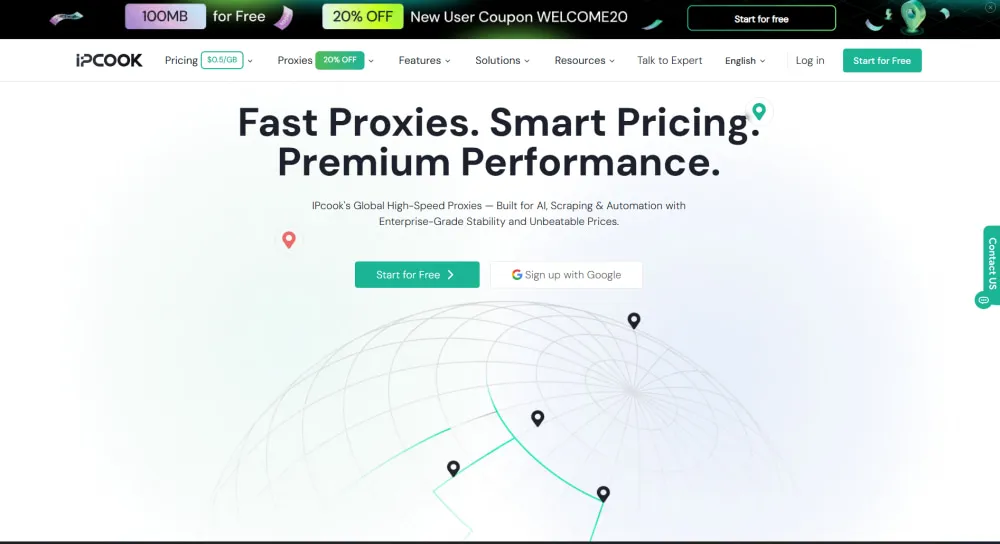
IPcook offers four proxy products: rotating residential, static ISP, datacenter, and unlimited residential. Its rotating residential network includes 55M+ IPs across 185+ countries, providing a broad selection of IP resources for different data collection projects. New users can also test connections on target websites with the 100MB free residential trial before purchasing.
Compared with IPRoyal, IPcook is a cheap IPRoyal alternative with flexible API integration. It supports integration with tools such as Python Requests, Selenium, and Scrapy, allowing users to automate web requests, collect website data, and rotate proxy IPs within existing workflows. This reduces manual configuration and simplifies large-scale data collection.
✨Key Features
HTTP and SOCKS5 protocol support
Country- and city-level targeting for residential proxies
Configurable IP rotation and sticky sessions of up to 24 hours for residential and unlimited residential proxies
API access for flexible proxy integration and management
Traffic monitoring and subaccount management
Pricing & Trial
Rotating Residential Proxies: Start at $3.20/GB for 1GB. Subscription rates go as low as $0.50/GB. Custom enterprise pricing starts at $0.30/GB. Traffic does not expire.
Static ISP Proxies: Start at $0.05/IP/day, with lower rates for larger packages. All plans include unlimited traffic.
Datacenter Proxies: Start at $0.04/IP/day with unlimited traffic.
Unlimited Residential Proxies: Start at $11.67/day for one-time purchases or $10.50/day with a 30-day auto-renewing subscription. Plans are priced by bandwidth, ranging from 100 Mbps to 9,900 Mbps, with unmetered traffic.
Free Trial: 100MB of residential proxy traffic with no expiration.
Best For
Developers, data service providers, and businesses managing multiple proxy-dependent projects may find IPcook a good fit. Its range of proxy types supports varied tasks, including web scraping, website monitoring, and automation. It is also suitable for teams looking to diversify their proxy suppliers or integrate additional proxy resources into existing infrastructure.
2. Oxylabs – Best for Enterprise Web Data Collection
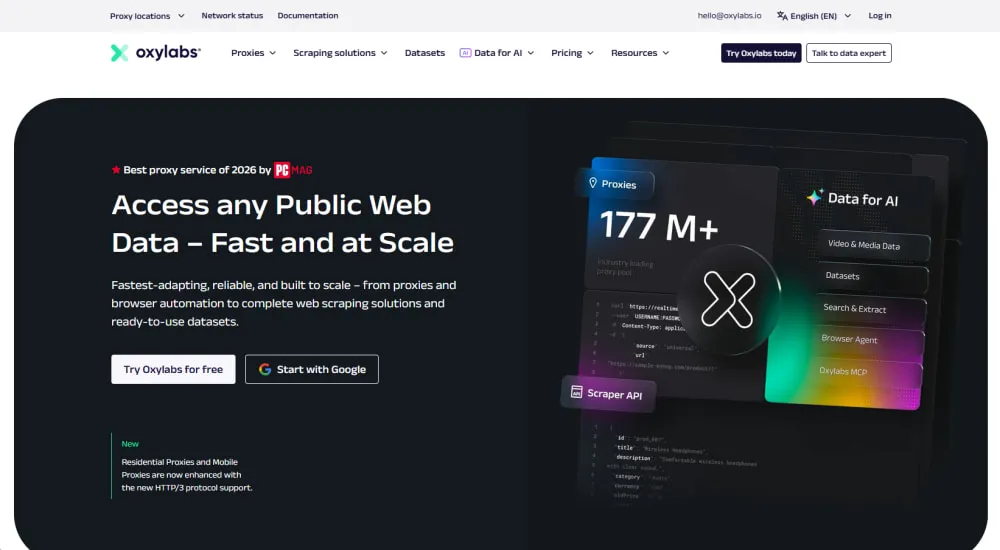
Oxylabs focuses on enterprise data services, serving businesses with large-scale and complex web data collection needs. Alongside conventional proxy services, it offers managed solutions for structured search results and automated webpage extraction. These services allow companies to retrieve data from multiple websites without building and maintaining the entire scraping infrastructure in-house.
✨Key Features
175M+ residential IPs across 195 locations
Residential, mobile, ISP, and datacenter proxies
Geographic targeting and rotating or sticky residential sessions
Web Scraper API for automated webpage extraction
Search data collection services
Managed web data collection solutions
Pricing & Trial
Residential Proxies: The Starter plan costs $30/month for 5GB, equivalent to $6/GB. Larger monthly packages offer lower per-GB rates.
Welcome Credits: New users can receive $5 in welcome credits for eligible products.
Web Data Collection Services: Scraping and search data collection products have separate pricing structures from standard residential proxy traffic.
Best For
Enterprise data teams, research organizations, and businesses handling large-scale web data collection may benefit from Oxylabs' managed services. It is particularly suitable for projects that need structured search results or extracted webpage data without building and maintaining the entire data retrieval infrastructure in-house.
📚Related Reading
Oxylabs' pricing and enterprise focus may not suit every project. Explore other options in our Oxylabs Alternatives comparison.
3. Webshare – Best for Free Proxy Testing
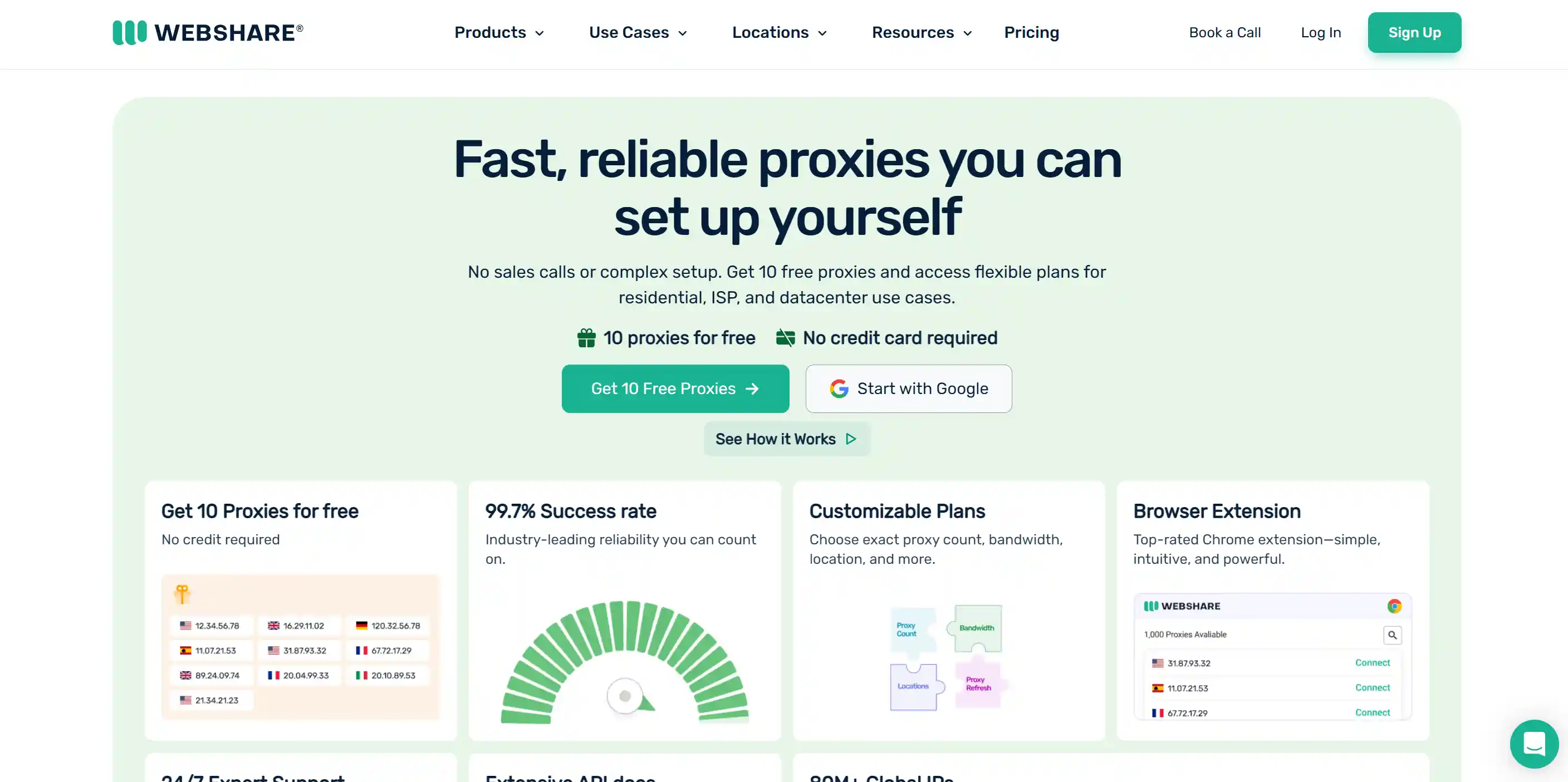
For users looking for a free IPRoyal alternative, Webshare offers a free entry-level shared datacenter proxy plan with no fixed expiration date or credit card requirement. This makes it easier for beginners, individual users, and small teams to explore proxy services without an upfront investment.
It also offers paid residential and datacenter proxies with multiple pricing plans. For projects with varying traffic demands, such as website monitoring, SEO research, and large-scale data collection, its range of proxy options and pricing tiers makes it easier to match resources to specific workloads and control proxy costs.
✨Key Features
10 free shared datacenter proxies
Up to 1GB of monthly bandwidth on the free plan
No fixed expiration for free proxy access
HTTP and SOCKS5 protocol support
Paid datacenter, static residential, and rotating residential options
Proxy configuration and usage management through a dashboard
Pricing & Trial
Free Shared Datacenter Proxies: 10 proxies with up to 1GB of monthly bandwidth. No credit card is required.
Paid Datacenter Proxies: Plans start at $2.99/month for 100 proxies.
Rotating Residential Proxies: The 1GB monthly plan starts at $3.50/GB.
Static Residential Proxies: Use separate per-IP pricing.
Best For
For budget-conscious projects involving proxy testing, lightweight web scraping, or basic website monitoring, Webshare offers an accessible starting point. Its free shared datacenter plan requires no initial purchase, while paid residential and datacenter options accommodate more demanding connection and traffic needs.
4. Decodo – Best for Proxy and Scraping Tool Integration
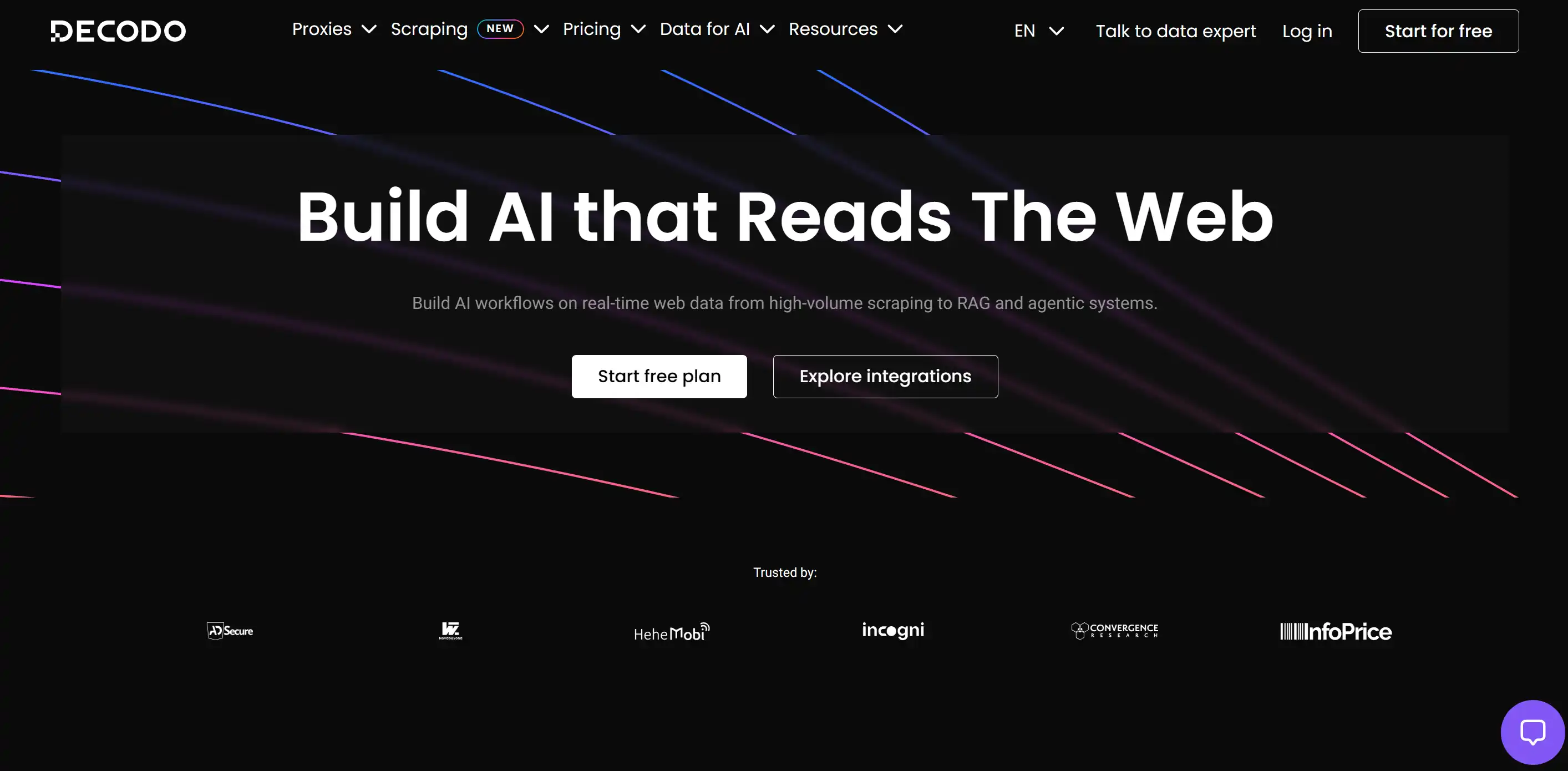
Decodo, formerly known as Smartproxy, combines proxy services with specialized web data collection tools. Its product range includes conventional proxy connections and dedicated scraping solutions for retrieving public website content, catering to teams with different data collection needs.
As an IPRoyal alternative, Decodo offers additional targeting options, such as ZIP codes and ASNs, alongside tools like Site Unblocker and web scraping solutions. These options give users more flexibility in accessing public web data without managing every request through a standard proxy connection.
✨Key Features
115M+ residential IPs across 195+ locations
Residential, ISP, datacenter, and mobile proxies
Country, city, ZIP code, and ASN targeting
HTTP(S) and SOCKS5 protocol support
Rotating and sticky residential sessions
Site Unblocker and web scraping services
Pricing & Trial
Residential Proxies: PAYG pricing starts at $4/GB. Monthly subscriptions start at $11.25 for 3GB, equivalent to $3.75/GB before applicable taxes.
Free Trial: Eligible new users can access a three-day trial with 100MB of traffic.
Trial Renewal: The selected subscription activates automatically when the trial ends unless canceled beforehand.
Dedicated Static Residential Proxies: Excluded from the standard free trial and subject to separate pricing.
Dedicated Datacenter Proxies: Also excluded from the standard free trial and subject to separate pricing.
Best For
Developers, SEO agencies, and data teams that rely on both proxy connections and specialized scraping tools may find Decodo a good fit. Its combination of proxy services and data collection solutions supports projects that retrieve public web data through existing applications or dedicated scraping services.
5. NodeMaven – Best for IP Quality Filtering
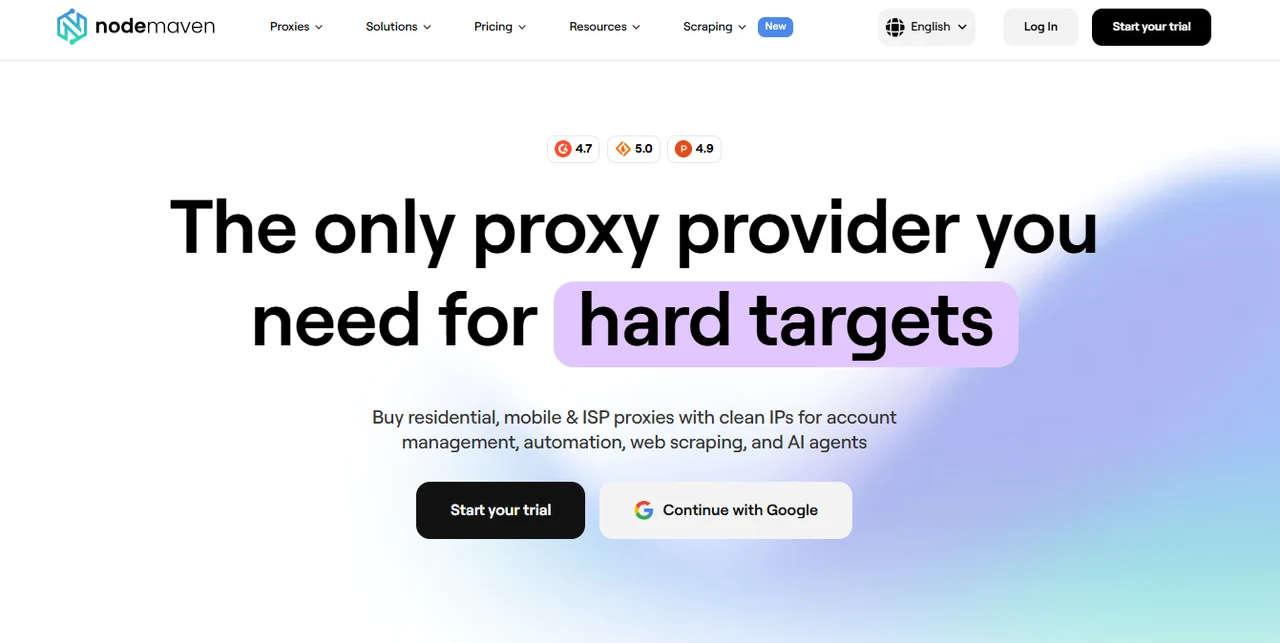
NodeMaven places particular emphasis on residential IP quality and filtering. Its filtering options include IP quality, connection speed, and pool size, allowing users to balance IP reputation, performance, and resource availability. It also supports precise targeting by country, city, ZIP code, and ISP.
Beyond IP filtering, NodeMaven offers automatic IP rotation, sticky sessions of up to 24 hours, and built-in Scamalytics fraud score checks. These features provide greater flexibility in managing connection sessions and help users reduce the risk of using low-reputation IPs during data collection.
✨Key Features
30M+ residential IPs across 190+ countries
IP Quality Filter for screening residential IPs
Adjustable IP quality and speed filters
Scamalytics-based fraud score checks
Country, city, ZIP code, and ISP targeting
HTTP(S) and SOCKS5 protocol support
Pricing & Trial
Residential Proxies: Monthly and PAYG purchasing options are available.
Testing Package: A 750MB package costs $3.50, allowing users to evaluate connection quality, location settings, and session behavior.
Traffic Rollover: Unused traffic can be carried over under the provider's rollover policy.
Cashback: The provider advertises cashback on used bandwidth.
Exact package rates and the applicable rollover and cashback conditions should be checked on NodeMaven's current pricing page before purchase.
Best For
NodeMaven is worth considering for tasks such as managing multiple social media accounts, accessing geo-restricted content, and collecting web data. Its IP quality filters and fraud score checks are useful when IP reputation is a key factor in reducing connection issues and maintaining consistent access.
How to Test and Switch from IPRoyal
Switching to an IPRoyal alternative does not require immediately canceling an existing service. Testing a new provider on selected websites and locations first gives users a chance to compare connection performance, compatibility, and costs before making a decision. Step 1. Review Your Current Proxy Setup.
Check the proxy types, server addresses, ports, authentication methods, geographic settings, and session configurations currently used. Record the requirements that need to be maintained during the transition. Step 2. Select a Comparable Proxy Plan.
Choose a residential, ISP, datacenter, or mobile proxy that matches the existing workload. Check protocol compatibility, target locations, and session options before purchasing. Step 3. Run Tests on Target Websites.
Test the new proxy against actual target websites. Record connection success rates, response times, geographic accuracy, retry frequency, and bandwidth consumption rather than relying solely on advertised specifications. Step 4. Update Your Proxy Configuration.
Replace the existing server address, port, and authentication credentials in your applications. Adjust IP rotation and sticky session settings, then verify that connections work as expected. Step 5. Compare Results and Complete the Switch.
Review test results and operating costs before increasing usage. Keep both providers, move selected tasks to the new service, or gradually complete the migration. Before canceling IPRoyal, check remaining traffic and subscription conditions.
Final Thoughts
Choosing an IPRoyal alternative involves evaluating more than pricing and network size. This guide has compared five providers across their proxy types, key features, pricing models, and use cases, giving you a clearer basis for assessing which service fits your project requirements.
If you're looking to scale your proxy usage without rebuilding your existing setup, IPcook offers API integration and flexible proxy resources to support your growing projects. Start with 100MB of free residential traffic to test its connections and integration with your existing tools before purchasing.
- How to Choose the Right IPRoyal Alternative
- IPRoyal Alternatives at a Glance
- 1. IPcook – Best for Flexible Proxy Integration and Scaling
- 2. Oxylabs – Best for Enterprise Web Data Collection
- 3. Webshare – Best for Free Proxy Testing
- 4. Decodo – Best for Proxy and Scraping Tool Integration
- 5. NodeMaven – Best for IP Quality Filtering
- How to Test and Switch from IPRoyal
- Final Thoughts