5 Best France Proxy Providers for Web Scraping and Data Collection

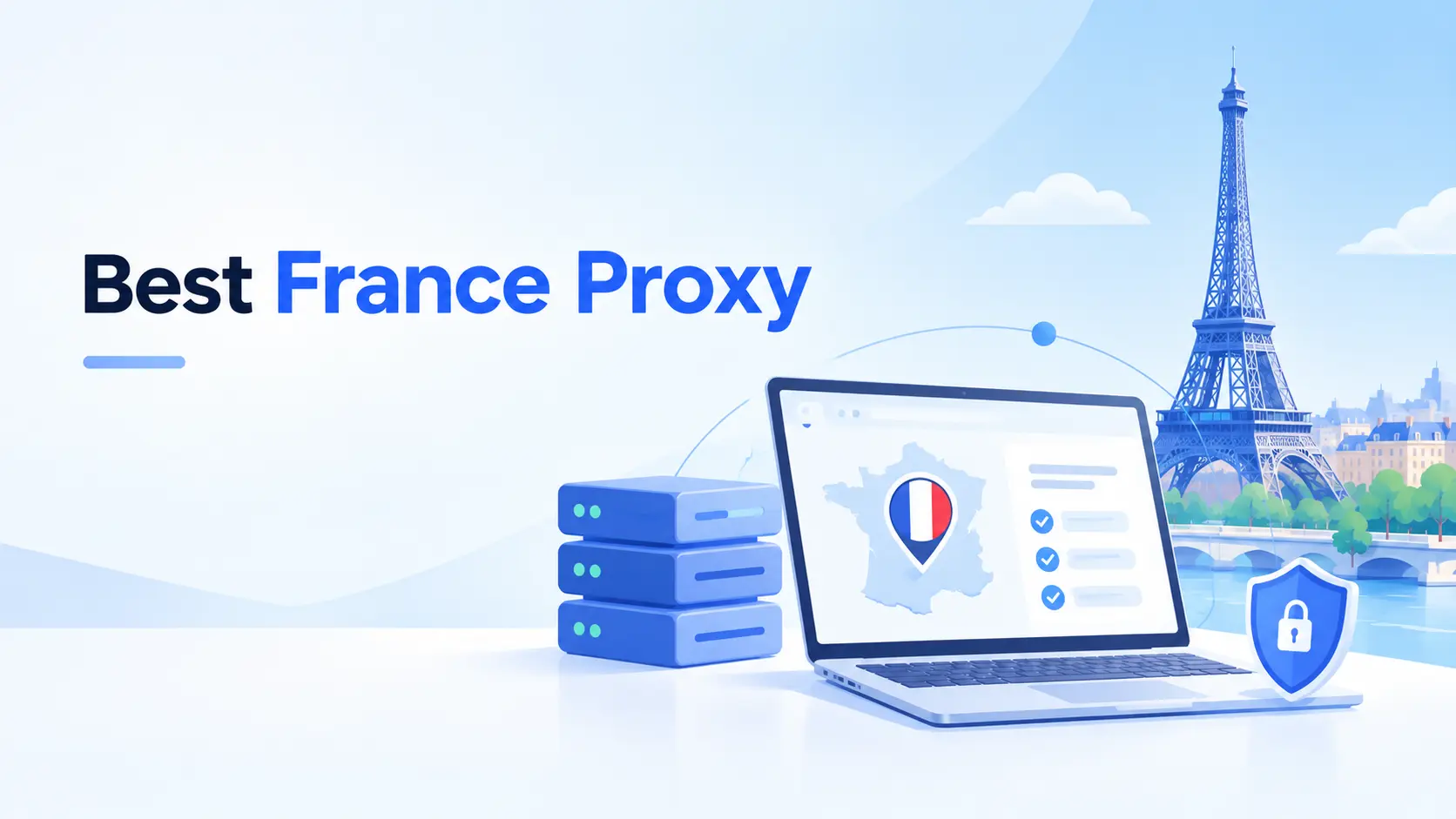
Scraping French sites like Amazon.fr, Cdiscount, or Leboncoin often triggers content differences, IP filtering, or access blocks when requests come from non-local IPs. France Proxy Providers solve this by routing requests through French IPs, so you collect data matching what local users see, including regional pricing, stock, SERP, and ad results.
This guide compares 5 France Proxy Providers: Bright Data, IPcook, Decodo, Geonode, and Byteful. It focuses on their France proxy types, pricing, rotation options, and geo-targeting capabilities to help you choose a suitable option for your data collection needs.
Why Do You Need French Proxies?
French proxies are useful when the data you need depends on the user's location. A French IP can help you access location-specific content and collect data that better reflects the French market.
E-commerce Data Collection: Marketplaces and classified platforms often show different prices, stock, and promotions based on visitor location. French IPs capture that local view for price monitoring, product research, and market analysis.
Local SEO and SERP Tracking: Track keywords from a French perspective, monitor local rankings, and compare search results across different locations.
Ad Verification and Market Research: Access websites from French locations to check location-dependent advertisements, page content, and other market information.
For businesses targeting the French market, these scenarios come up constantly, making French proxies a practical part of everyday data workflows.
Which Proxy Type Should You Use for France?
Different data collection tasks require different types of IP addresses. Some projects need a network environment closer to regular users, while others prioritize IP stability or high-volume requests.
When choosing a France proxy, consider the proxy's IP source, session behavior, and intended use rather than comparing providers based only on price or IP quantity.
Residential Proxies
Residential proxies use IP addresses tied to real residential networks, so traffic looks much closer to that of an ordinary local user. For France-focused work, they suit tasks where a genuine local footprint matters, such as tracking regional listing changes, checking localized pricing, or verifying ads for French visitors.
Residential proxies usually support rotating or sticky sessions, allowing you to switch IPs between requests or keep the same IP for a set period. Providers like IPcook offers Sticky IP sessions lasting up to 24 hours, which can be useful for tasks that need to maintain cookies, pagination state, or a continuous browsing session.
ISP (Static Residential) Proxies
ISP proxies, also called Static Residential proxies, use ISP-assigned IP addresses but keep the connection stable instead of rotating. Unlike standard Residential proxies, which change IPs frequently, ISP proxies hold one IP for as long as you need it.
That stability suits tasks requiring continuous access to multiple pages or sessions that must not break midway. Options like Bright Data Static ISP or Decodo Static Residential Proxies fit scenarios where IP persistence matters more than rotation.
Typical examples include keeping a seller account logged in on Amazon.fr, tracking a competitor's Cdiscount listing daily over several weeks, or pulling inventory data from Leboncoin without dropping the session.
Mobile Proxies
Mobile proxies route traffic through IP addresses assigned by mobile carriers, placing requests on cellular networks rather than home broadband. This network environment differs from Residential proxies and better reflects how mobile users browse.
They suit app testing, mobile-web data collection, and mobile ad verification, where results can vary between desktop and mobile connections. Decodo, for example, offers mobile proxies for projects that need this cellular-level realism.
Datacenter Proxies
Datacenter proxies come from cloud and hosting providers rather than ISPs serving homes or mobile devices. That origin gives them faster speeds and lower costs, making them practical for high-volume requests where speed and budget matter more than looking like a typical user.
The trade-off is visibility. Some sites flag datacenter IPs more readily, so check the target site's tolerance before committing. Byteful's datacenter proxies, for instance, can be considered when speed and cost are more important than residential-like IP characteristics.
Best France Proxies at a Glance
The five France proxy providers below offer different combinations of proxy types and features for France. Comparing them side by side makes it easier to identify which options match your data collection requirements.
Provider | France Proxy Types | Pricing | Rotation | Geo-Targeting |
Bright Data | Residential, ISP, Datacenter | Residential: from $2.5/GB; | Automatic rotation, sticky sessions, unlimited concurrency | Country, city, ZIP code, carrier, and ASN targeting |
IPcook | Residential, Static ISP | Residential: from $0.3/GB; | Smart rotation | Country and free city-level targeting |
Decodo | Residential, Static Residential (ISP), Mobile, Datacenter | Residential: from $2/GB; | Rotating + sticky sessions | Country, state, city, ZIP code, and ASN targeting |
Geonode | Residential | Residential: from $0.27/GB | Rotating and sticky sessions | Country, state, city, and ASN/ISP targeting |
Byteful | Residential, Static Residential (ISP), Datacenter, Mobile | Residential: from $2.75/GB; | Automatic rotation; sticky sessions up to 24 hours | Country, region, city, and ISP targeting |
Pricing and features differ across products and plans, so check the provider's current France proxy page for the latest details before you buy.
1. Bright Data
Bright Data is one of the largest proxy networks in the market, with a long-standing reputation for broad IP coverage and granular targeting controls.
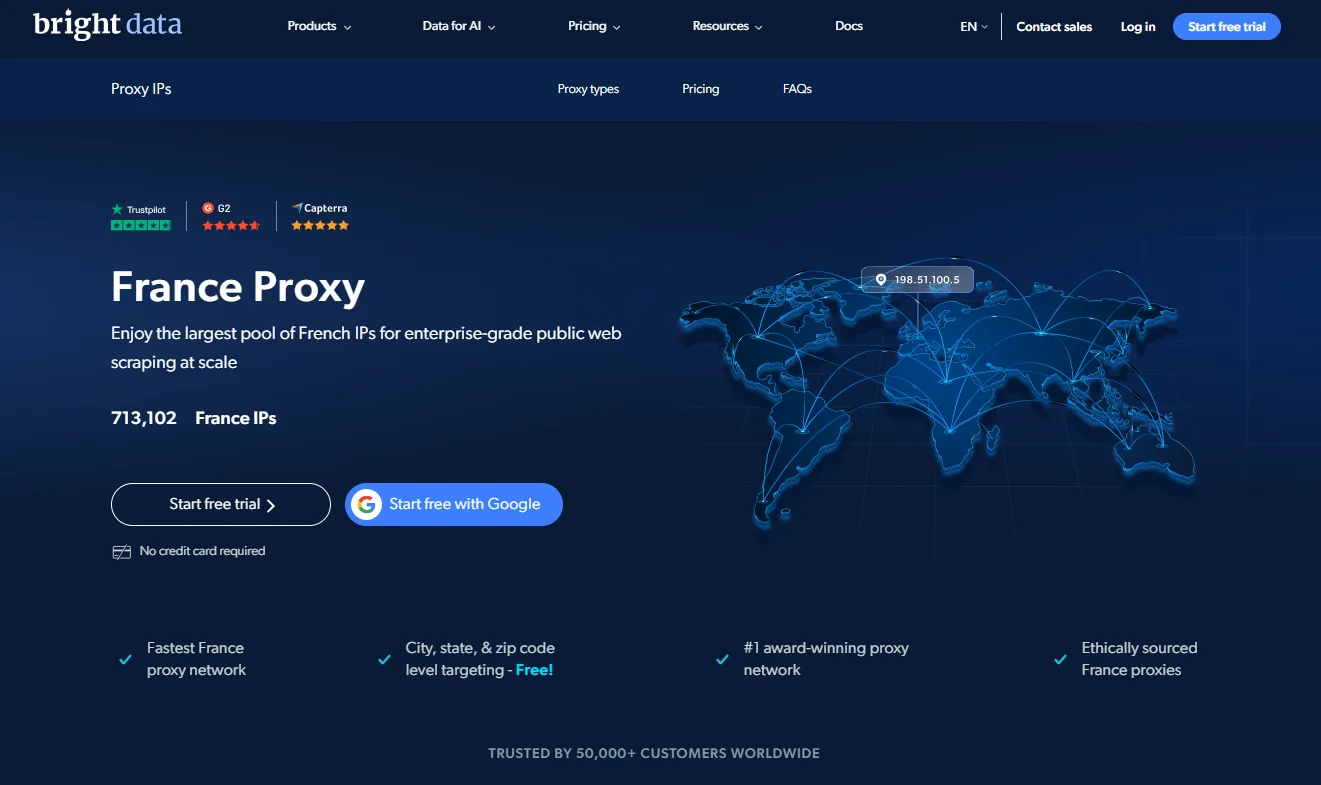
Multiple proxy types: Residential, ISP, and Datacenter cover French e-commerce collection, long-running tasks that need stable IPs, and high-concurrency scraping.
Detailed geo-targeting: Country, city, ZIP code, carrier, and ASN targeting suit projects comparing data across French cities, postal areas, or network environments.
Rotation and session control: Automatic rotation and sticky sessions let you adjust IP behavior to fit different collection tasks.
Concurrency: Unlimited concurrency supports projects handling large volumes of simultaneous requests.
Pricing: Residential, ISP, and Datacenter each use per-GB or per-IP billing.
Its targeting depth stands out. Few providers match the carrier and ASN-level options, which help when you need to compare results across specific French networks rather than just cities. Unlimited concurrency also makes it a practical choice for large-scale collection that other providers may throttle.
2. IPcook
For smaller teams or budget-conscious projects, IPcook France proxies offer flexible targeting and session options for different data collection needs.
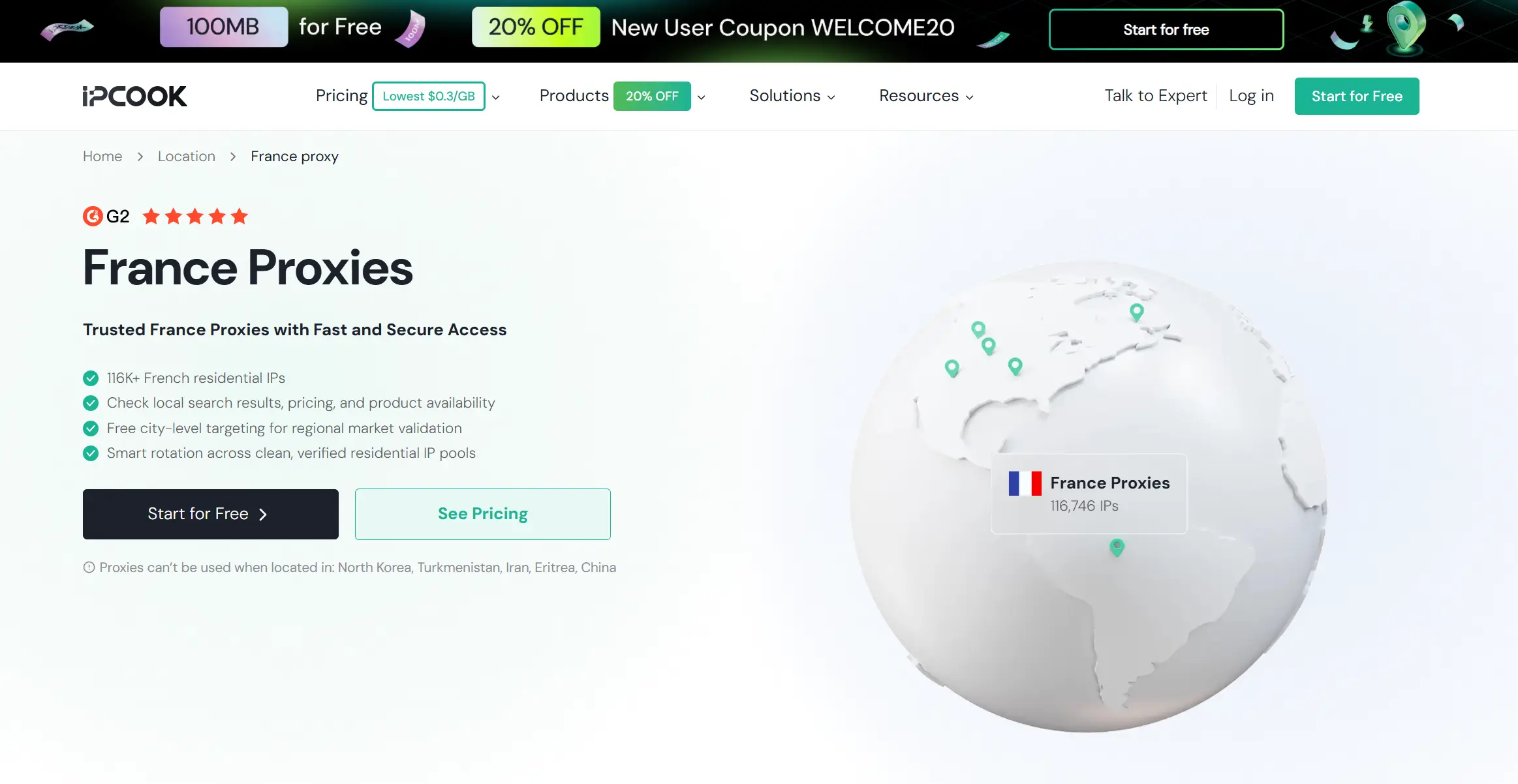
Residential and Static ISP: IPcook offers both Residential proxies for rotating IPs and Static ISP proxies for maintaining a consistent IP, giving you more flexibility for different data collection needs.
France geo-targeting: Country and free city-level targeting support nationwide collection as well as city-level market research.
Smart rotation: Built for collection tasks that need continuous IP changes.
Pricing: Residential from $0.3/GB; Static ISP from $0.05/IP, letting you control costs by traffic or IP needs.
Protocols: HTTP and SOCKS5, compatible with different scraping tools and program environments.
IPcook stands out for its flexible France targeting and proxy options. Its free city-level targeting is useful for projects that need to compare search results, prices, or product availability across French cities, while its Residential proxies and Static ISP proxies cover different connection needs. This makes it easier to switch between rotating residential IPs for localized data collection and stable ISP IPs for tasks that require a consistent connection.
3. Decodo
Projects that need a residential environment without paying residential-only rates may find Decodo worth a look.
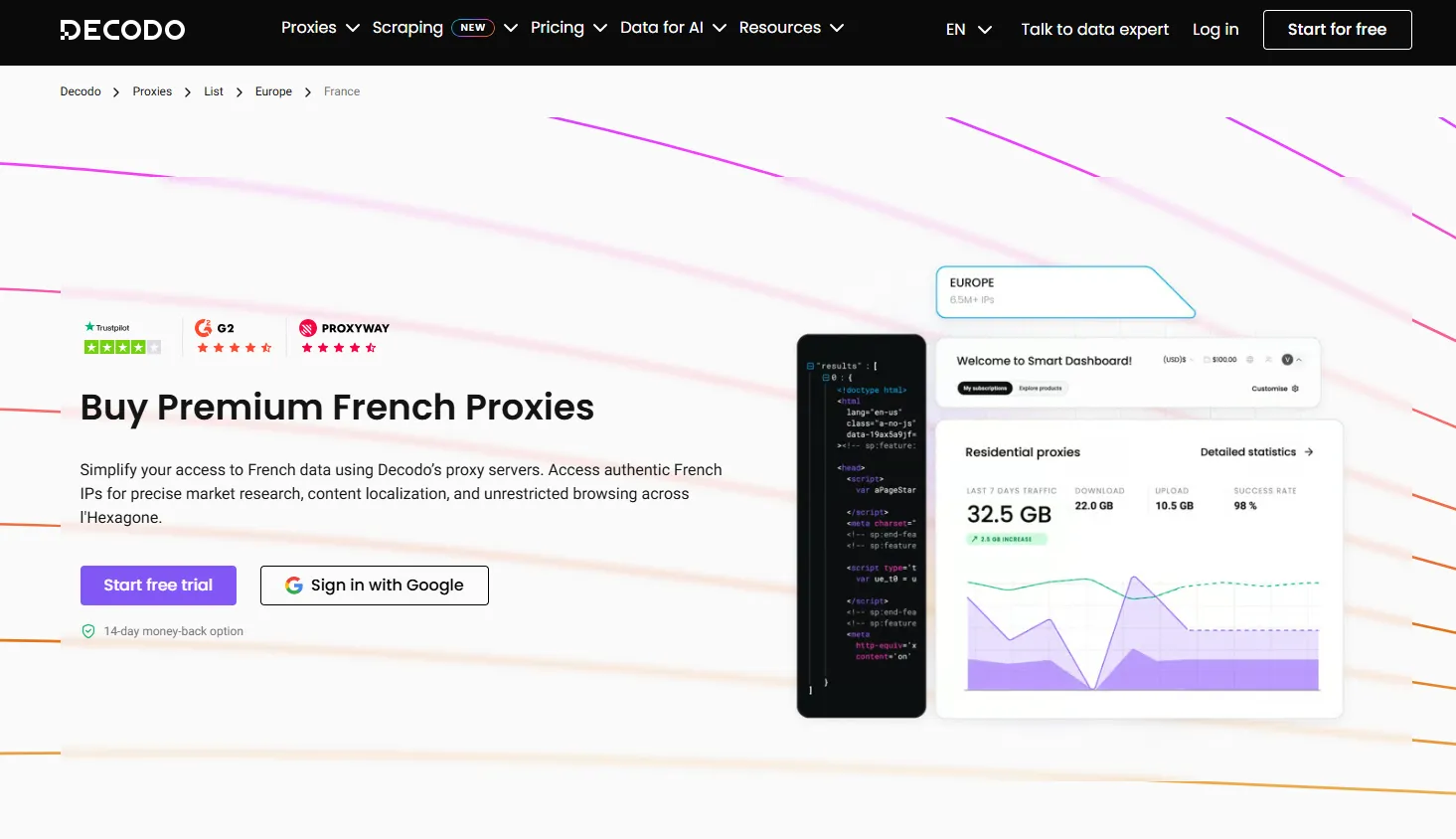
Mixed proxy option: Blends sources to balance cost and authenticity, a useful middle ground when pure residential feels expensive.
Wide format coverage: Residential, Static ISP, Mobile, and Datacenter give you room to match the network type to each target site.
Flexible session handling: Rotating and sticky sessions let you switch IPs between requests or hold one for a longer scraping run.
Granular targeting: Country, state, city, ZIP code, and ASN targeting support both nationwide and local French data collection.
Pricing: Residential from $2/GB; Static ISP from $0.27/IP; Mobile from $2.25/GB; Datacenter from $0.02/IP.
The Mixed option is the main differentiator. Rather than a single proxy type, it blends sources to balance cost and authenticity, which helps when a project needs residential-level trust on a tighter budget. Check the provider's current product information to confirm the exact composition before relying on it for French e-commerce scraping or local search monitoring.
4. Geonode
Among the providers here, Geonode stands out for covering Residential proxies for France at a low entry price.
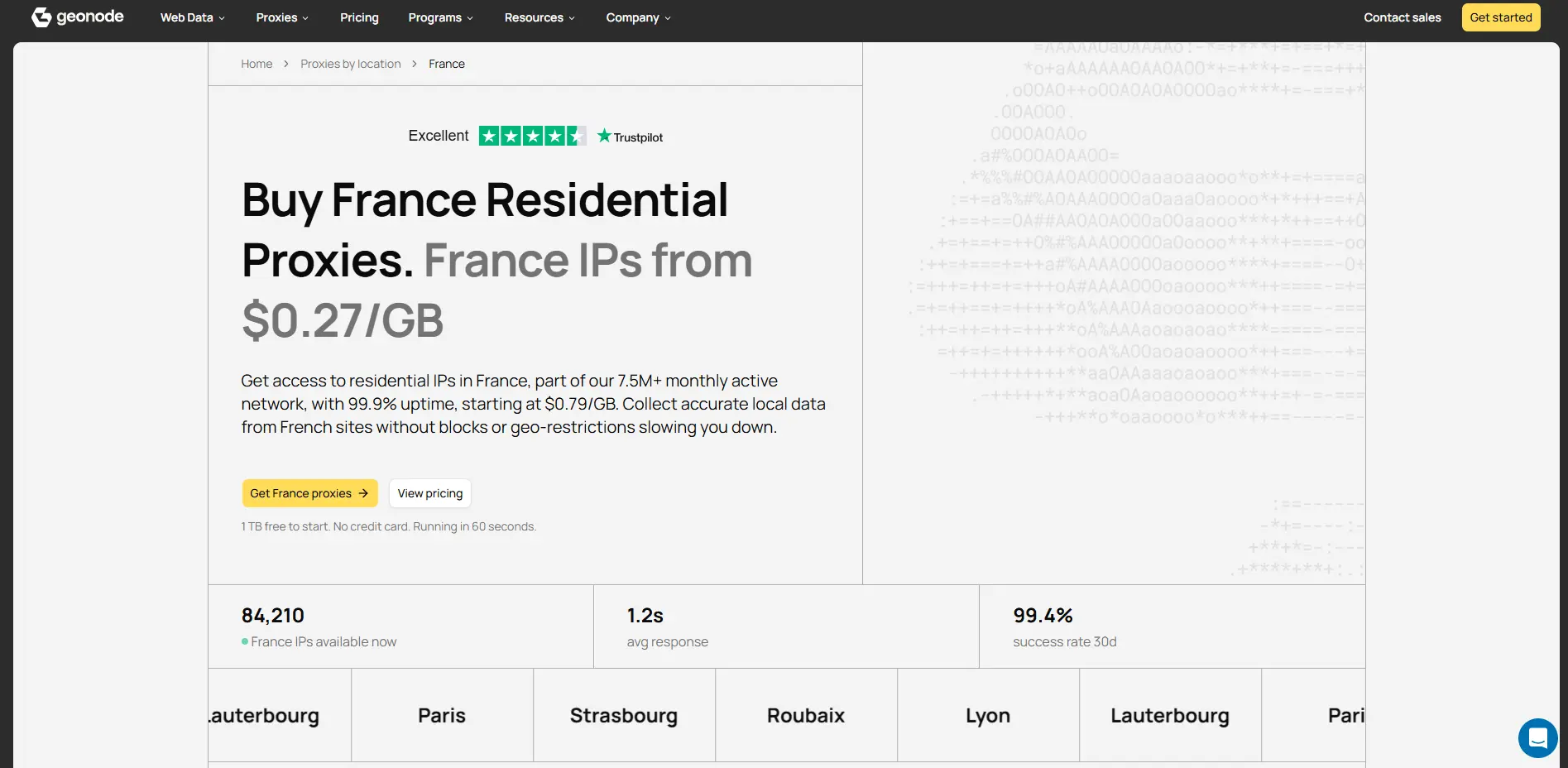
Low entry pricing: Residential from $0.27/GB, the lowest starting point among the five providers compared here.
Budget-friendly for continuous scraping: A practical option for long-running collection where per-GB cost adds up quickly.
Simple format choice: With a single proxy type, there is less configuration to weigh before starting.
Geo-targeting: Country, state, city, and ASN/ISP targeting support nationwide and local French data collection.
The main appeal is cost efficiency. At $0.27/GB, Geonode offers one of the cheapest residential entry points in this comparison, which helps when you are scraping continuously and watching budget. The trade-off is format range: if your project later needs mobile, ISP, or datacenter IPs, you will have to look elsewhere.
5. Byteful
Targeting controls beyond country level make Byteful a practical option for projects that need more precise French location selection.
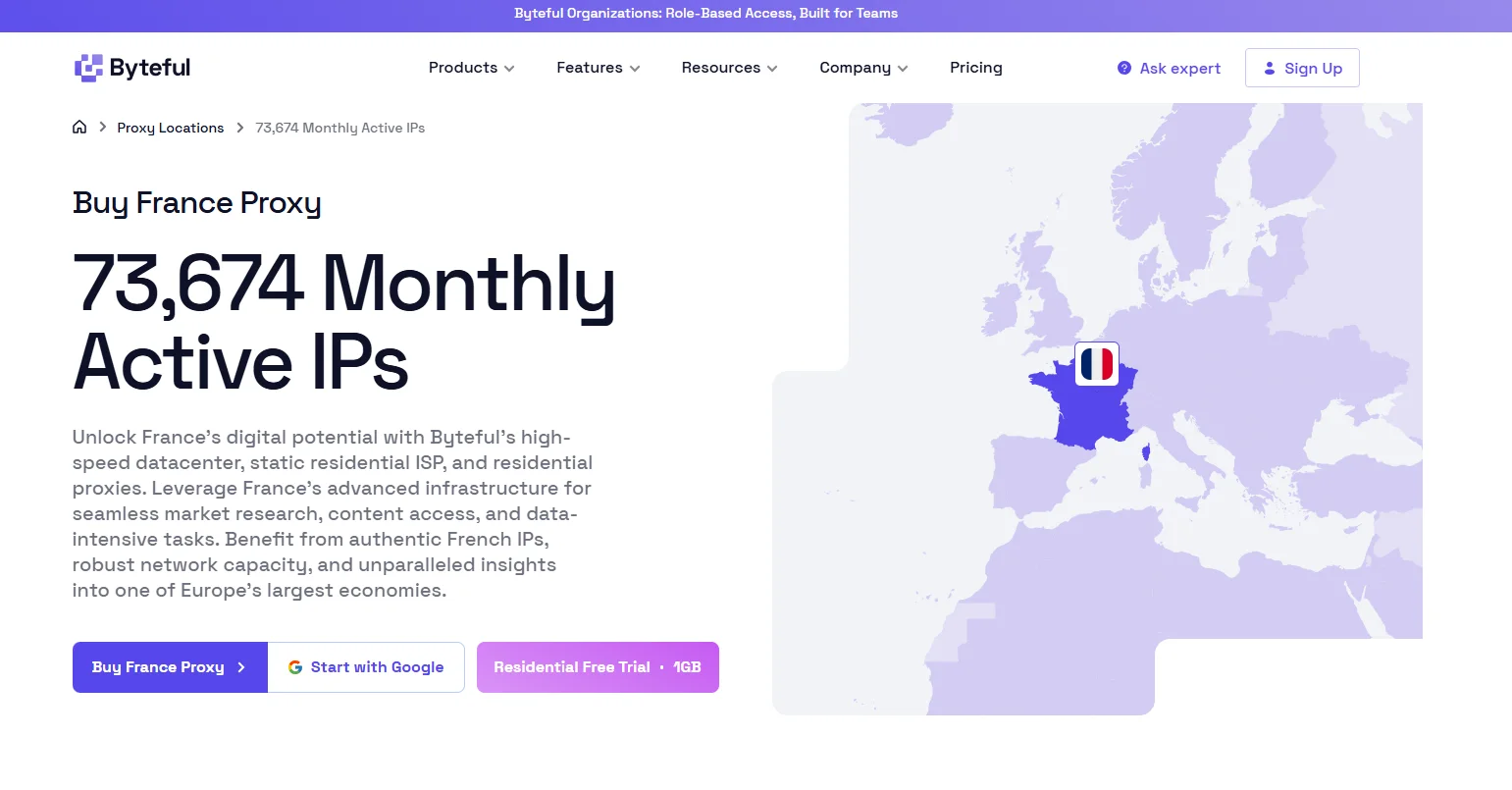
ISP-level targeting: Compare how different French networks serve the same page, beyond city or region.
24-hour sticky sessions: Keep the same IP throughout a full day of scraping when session consistency matters.
Broad format range: Residential, Static Residential, Datacenter, and Mobile are available for different collection requirements.
Regional comparison: Country, region, city, and ISP targeting support localized market research.
Pricing: Residential from $2.75/GB; Static Residential from $2.75/IP; Datacenter from $1.6/IP; Mobile from $3.45/GB.
The combination of detailed targeting and long sticky sessions can be useful for projects that need consistent IPs while comparing data across French networks or locations. For budget-sensitive projects, it is worth comparing the pricing of each proxy option against the expected traffic volume and session requirements.
How to Choose the Right French Proxy
The right French proxy depends on the requirements of your data collection task. After comparing different proxy types and providers, you should also consider whether their features, connection options, and pricing match your specific needs.
Location Coverage: Country-level targeting works for general French data collection, while city, region, ZIP code, or ISP-level targeting is useful if you need to compare data across different areas.
Rotation and Session Control: Rotating sessions suit tasks that require frequent IP changes, while sticky sessions are better when you need a stable IP for e-commerce scraping, local search monitoring, or longer data collection.
Proxy Type: Residential, ISP, Mobile, and Datacenter proxies serve different requirements. Consider whether you need a user-like connection, stable IPs, mobile networks, or support for high-volume requests.
Pricing Model: Residential and some Mobile proxies are commonly billed by GB, while ISP, Static Residential, and some Datacenter products may be billed by IP. Compare your expected traffic, IP count, and usage period to estimate the actual cost.
By matching these factors with your target website, data volume, and collection method, you can narrow down the French proxy options that fit your project without paying for features you do not need.
Conclusion
This guide compared 5 best France proxies: Bright Data, IPcook, Decodo, Geonode, and Byteful. Each takes a slightly different approach, and the ideal pick shifts with your goals and constraints.
Look at your target locations, data volume, IP stability, session needs, and budget before making a choice. If you need flexible IP rotation and session control, France location targeting, or more control over static proxy costs, IPcook can be a practical option.