7 Best Plain Proxy Services 2026: Simple, Fast & Affordable


Plain proxies offer a simple and affordable way to access the internet through a different IP address without dealing with unnecessary complexity. They can be useful for browsing, testing, scraping, and other everyday proxy needs.
With different providers offering different IP sources, speeds, features, and pricing, choosing the right service can still take some research. In this guide, we've reviewed 7 best plain proxy services in 2026 and compared their features, performance, and pricing to help you find the option that fits your needs.
What Is a Plain Proxy?
A plain proxy works like a middle stop on the way to a website. Instead of going straight from your device to the site, your request takes a short detour through a proxy server. The site receives the proxy's IP address instead of your original IP. For anyone exploring proxies for the first time, this provides a simple way to understand how a proxy connection works.
The term plain proxy is not a strict technical category. It is generally used to describe a straightforward proxy service or setup, rather than a specific type of IP or protocol. A plain proxy can use different IP types, including residential, ISP, and datacenter IPs, depending on the provider. Features such as IP rotation, geolocation targeting, proxy protocols, and authentication also vary by service. In other words, "plain" describes the simplicity of the proxy setup or service, not a fixed technical specification.
Plain proxies are often used for:
Learning and testing: Trying proxy scripts, browser settings, or basic proxy configurations.
Basic browsing: Routing web traffic through another IP without a complex setup.
Simple automation: Using a proxy with scripts or tools for repetitive web tasks.
Lightweight web scraping: Collecting publicly accessible web data when a simple proxy setup is sufficient.
How to Choose the Right Plain Proxy
When selecting the plain proxy services for this list, the biggest thing we considered was whether they offer a good balance of reliability, performance, privacy, and affordability. Free or public proxy lists might look tempting, but they are often slow, unstable, or less reliable. For this list, we focus on providers that offer a simple proxy setup while providing a more dependable service for common use cases.
We considered a few key factors when comparing each provider:
Proxy source: Whether the available proxy sources can meet different needs and workflows.
Stability: We considered connection reliability and whether the service can maintain stable sessions without frequent drops.
Stability: Reliable connections, consistent performance, and the ability to maintain sessions without frequent drops.
Privacy: The provider's privacy practices and how it handles user traffic and connection data.
Speed: Connection speed and response times, particularly for tasks where performance is important.
Ease of use: A straightforward setup process, clear configuration options, and convenient proxy management.
Features and flexibility: Options such as IP rotation, geo-targeting, and other features that can support different use cases.
Pricing: Available plans, pricing models, and overall value for different usage levels.
7 Best Plain Proxy Providers in 2026
No.1 IPcook
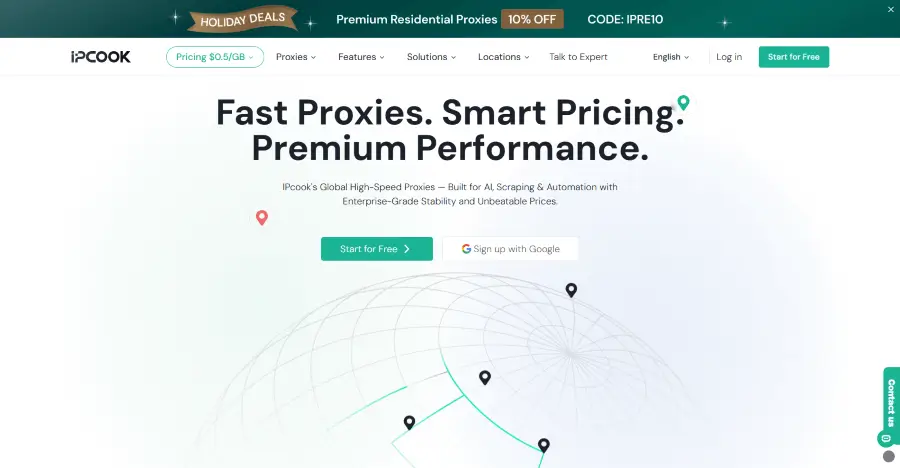
IPcook offers datacenter proxies designed for simple, fast, and affordable proxy use. Its all-in-one dashboard keeps the entire process in one place, from adding funds and purchasing proxies to accessing proxy details. Once purchased, you can export the credentials and configure your proxies directly, making it easy to get started without complicated setup. With response times under 0.5 seconds and 99% uptime, the proxies are built for smooth and reliable use. Pricing starts at $0.04/IP per day.
For SEO monitoring, data scraping, and other tasks, IPcook Residential Proxies also offer an easy way to manage and deploy proxies. You can add up to 10 free subaccounts with a single click, assign permissions flexibly, and manage proxy access across your team from the dashboard. For faster deployment, a one-line API call can allocate proxies for automated scripts, while proxy lists can be generated instantly, copied, or exported directly. The dashboard also provides real-time visibility into traffic usage and connection status.
Key Features include:
55M+ residential IPs across 185+ countries and locations
HTTP and SOCKS5 protocol support
Residential IP rotation and sticky sessions of up to 24 hours
Choose datacenter IPs from 4 major countries or mix locations in one order
Username-and-password authentication for datacenter proxies
Datacenter proxies with unlimited traffic
Pay-as-you-go and subscription plans for residential proxies
Residential proxy traffic that never expires
No.2 Webshare
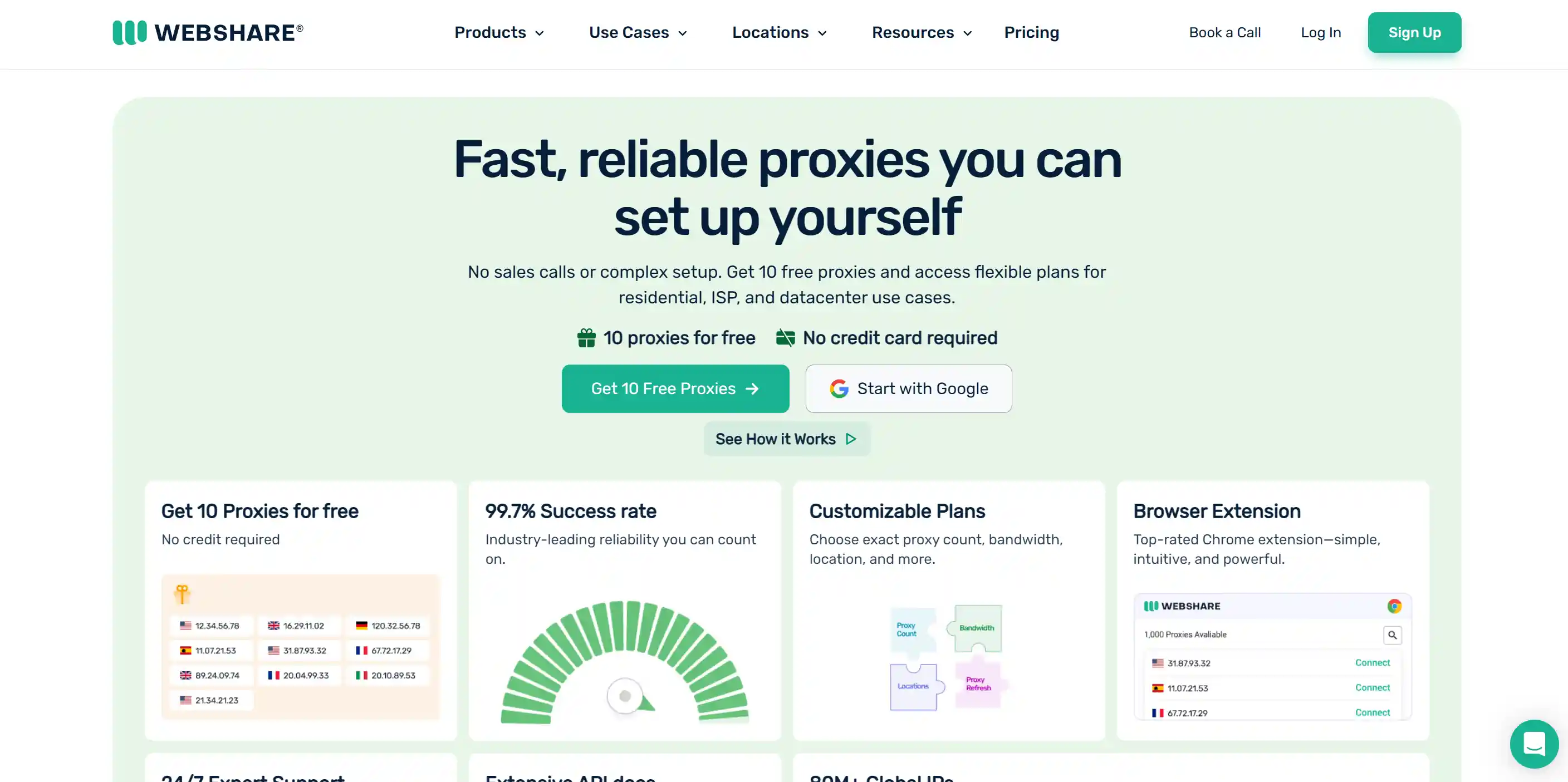
Webshare is a popular choice for users who want affordable plain proxies without extra complexity. The platform provides access to more than 80 million IPs across 195 countries, supporting HTTP and SOCKS5 protocols. Its plain proxy setup is simple and fast, allowing users to generate proxy lists through the dashboard or API and start browsing, testing scripts, or running automation tools within minutes.
With rotation support and reliable uptime, Webshare is also a solid option for light browsing, small-scale testing, and ad verification. Residential proxy pricing starts at around $3.5/GB, with discounts dropping to about $1.40/GB for higher volumes.
Key features include:
80M+ residential IPs in 195 countries
HTTP and SOCKS5 protocol support with easy API integration
Simple dashboard for proxy list generation and management
Rotation support with stable, reliable uptime
Flexible residential proxy pricing starting at $3.5/GB with volume discounts
No.3 PlainProxies
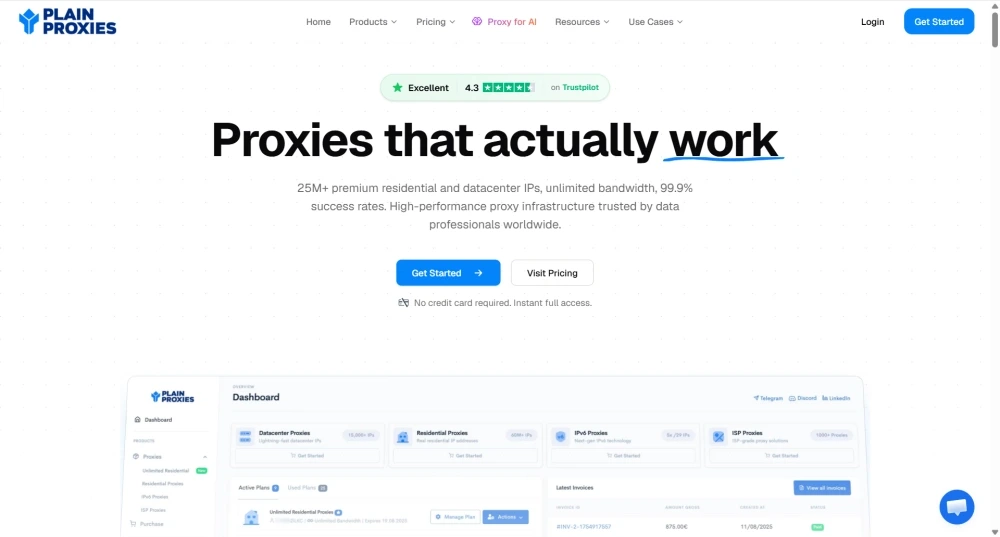
PlainProxies provides both residential and datacenter proxies from a global network, designed to deliver fast and low-latency connections with transparent, gigabyte-based plans. Its residential network includes over 25 million IPs across 195+ countries, while its datacenter pool has more than 15,000 IPs in regions such as the US, UK, Germany, and the Netherlands. These options make it versatile enough for browsing, scraping, and account management.
The service supports rotating and sticky sessions, ensures stable performance, and can be set up quickly through a clean dashboard. Pricing is straightforward, with flexible choices ranging from GB-based packages of different durations to unlimited traffic plans billed by time. With its mix of transparent pricing and flexibility, PlainProxies is a practical choice for users who want plain proxies that are easy to manage while still allowing room to scale.
Key features include:
25M+ residential IPs across 195+ countries
HTTP/HTTPS protocol support
Rotating and sticky sessions with stable performance
Easy-to-use dashboard and quick setup
Residential pricing starting at around €2.30/GB with flexible durations or unlimited time-based plans
No.4 Storm Proxies
Storm Proxies is best known for its backconnect rotating proxies, built on a shared pool of over 700,000 IPs from both datacenter and residential sources. For users who want plain proxies that are simple to set up and come with unlimited bandwidth, it provides automatic IP changes without extra complexity, making it suitable for small-scale scraping, SEO tools, and account automation.
The platform supports rotation either per request or at fixed intervals of 3 or 15 minutes, with pricing based on thread limits rather than bandwidth. Plans start at $39/month for 40 threads, with larger packages available up to 400 threads or even private servers. While the IP pool is smaller and geo-targeting is limited compared to major providers, Storm Proxies remains a cost-effective choice for individuals and small teams.
Key features include:
700k+ rotating IP pool
HTTP/HTTPS protocol support
Automatic IP rotation per request or timed intervals
Unlimited bandwidth included in all plans
Simple setup with thread-based proxy pricing starting at $39/month
No.5 FlyProxy
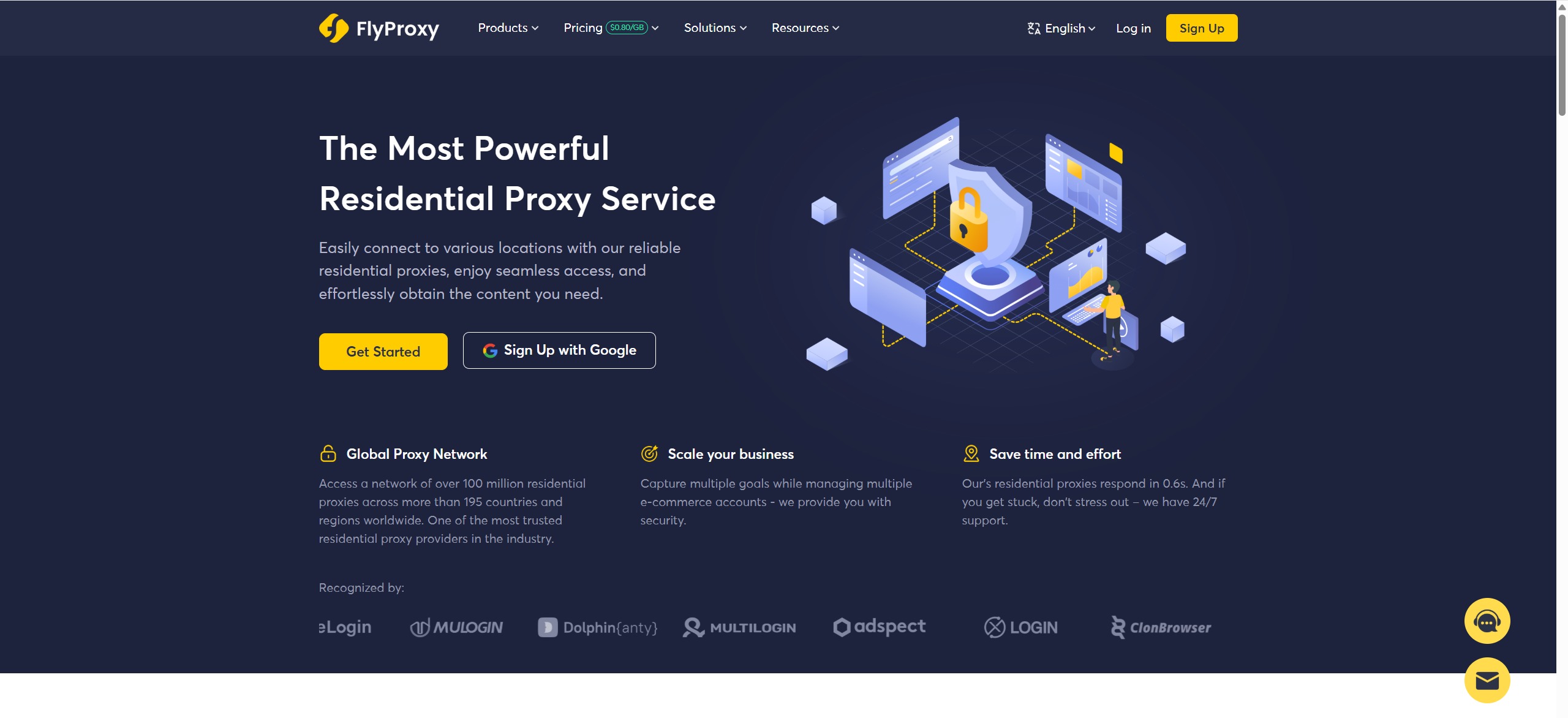
FlyProxy stands out for its simple setup and secure proxy infrastructure. It offers 100M+ real-device IPs across 195+ countries, with country, state, and city targeting. Sessions can last up to 24 hours, with HTTP/HTTPS and SOCKS5 support. Its dedicated residential proxies are not shared or spliced, so each proxy is available only to you while in use.
Residential IPs support unlimited concurrent sessions without session limits. The dashboard provides proxy usage statistics, sub-user management, and subscription management. Flyproxy also integrates with third-party software, Google and Firefox extensions, and popular fingerprint browsers.
Key features include:
100M+ real-device IPs across 195+ countries
Country, state, and city-level targeting
Dedicated residential proxies with no sharing
Unlimited concurrent sessions
HTTP/HTTPS and SOCKS5 support
No.6 Decodo
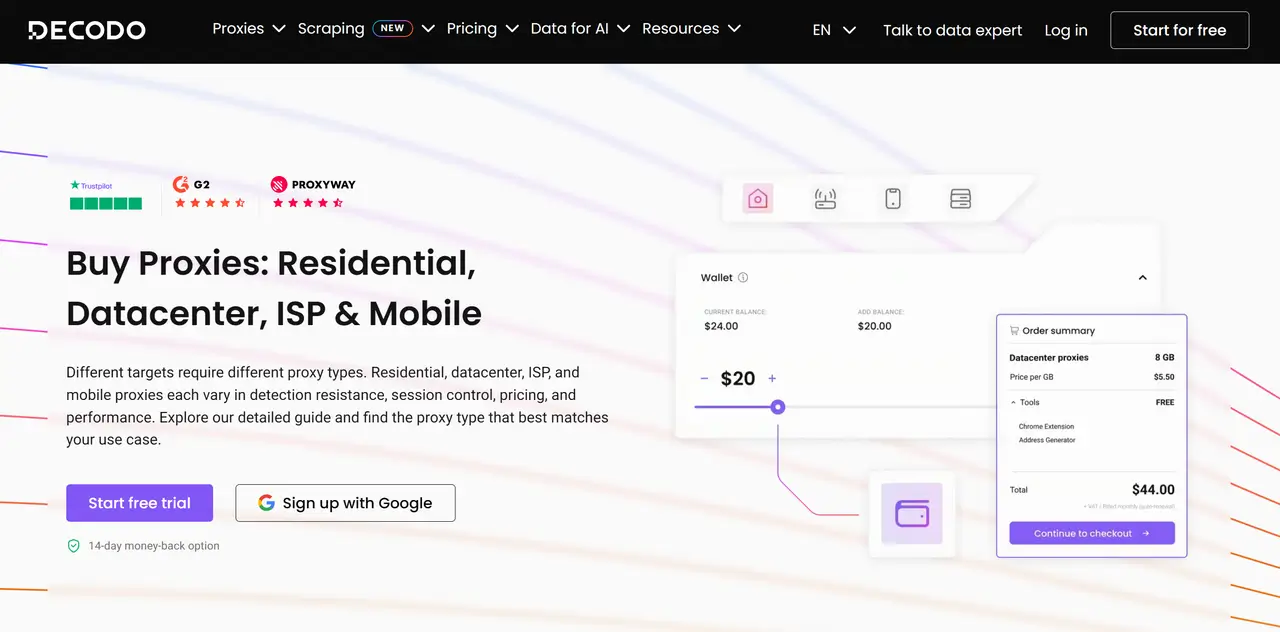
Decodo offers a broad proxy network with more than 115 million IPs worldwide across residential, datacenter, ISP, and mobile types. For plain proxy users, it provides simple HTTP and HTTPS connections with SOCKS5 available for added compatibility, making setup quick and approachable.
The platform is easy to start with thanks to its clean dashboard and Chrome extension, while more advanced users can take advantage of rotation, sticky sessions, and a developer-friendly API. With this mix of simplicity and flexibility, Decodo is a versatile option that works equally well for beginners and developers who need reliable proxy access.
Key features include:
115M+ IPs across residential, datacenter, ISP, and mobile
HTTP, HTTPS, and SOCKS5 protocol support
Plain proxy setup with optional rotation and sticky sessions
Geo-targeting options down to city and ASN level
Dashboard, extension, and developer-friendly API with documentation
Residential pricing starts at $3.75/GB with volume discounts available
No.7 BirdProxies
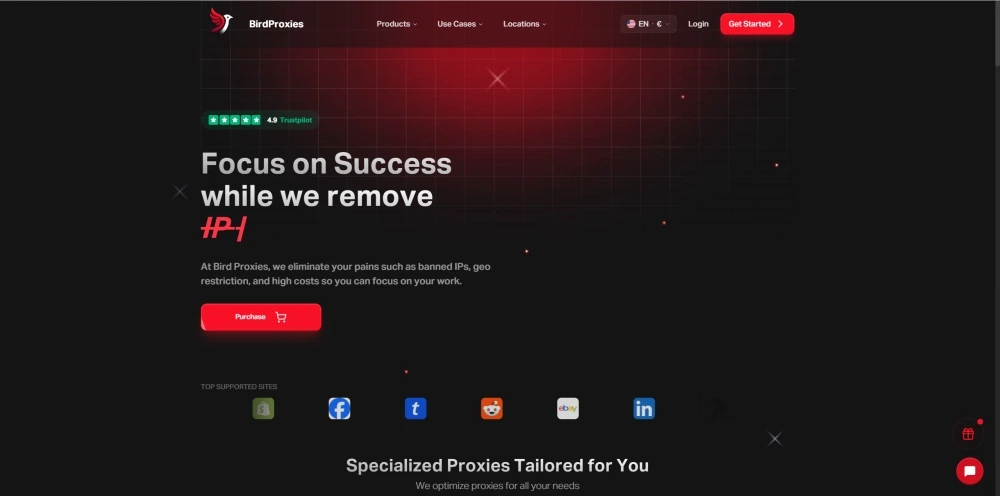
BirdProxies focuses on speed and access to major ticketing platforms, making it suitable for time-sensitive ticket purchasing workflows. Its residential network includes 72M+ IPs across 180+ countries, while connection speeds of 23–55ms can help reduce delays when tickets are released or availability changes. It works with platforms such as Eventim, Fansale, and SeeTickets, giving you proxy access across different ticketing sites. Pricing ranges from $3.75 to $5 per GB.
Key features include:
72M+ residential IPs across 180+ countries
23-55ms connection speeds
Support for Eventim, Fansale, SeeTickets, and major ticket platforms
Residential proxy pricing from $3.75–$5/GB
Comparison Table of 7 Best Plain Proxy Services
To help you quickly compare the providers covered above, the table below highlights their proxy networks, supported protocols, ease of setup, stability, and reference pricing. This overview makes it easier to see how each service differs in coverage, performance, features, and pricing.
Provider | IP Pool & Coverage | Setup Simplicity | Residential Proxy Price | Datacenter Proxy Price |
IPcook | 55M+ residential IPs / 185+ countries | User-friendly dashboard | $0.3–$3.2/GB | $0.04/IP/day |
Webshare | 80M+ residential IPs / 195 countries | Dashboard & API | $1.4–$3.5/GB | Up to $0.0224/IP/month |
PlainProxies | 25M+ residential IPs / 195+ countries | Easy dashboard, quick setup | €0.95-€2.3 per GB | Starting at €2/month |
Storm Proxies | 700k+ rotating IPs | Simple setup | $6–$9/Port | / |
FlyProxy | 100M+ real-device IPs / 195+ countries | Dashboard & browser integrations | $2.5–$1.9/GB | Starting at $3.85/IP |
Decodo | 115M+ IPs / worldwide | Dashboard, extension & API | $3.75–$4/GB | $0.035–$0.02/IP |
BirdProxies | 72M+ residential IPs / 180+ countries | Dashboard | €2-8 per GB | €0.50-2 per IP/month |
Final Verdict
Each provider takes a different approach. Webshare focuses on affordable residential proxies and easy setup, while PlainProxies offers flexible residential and datacenter options. Storm Proxies emphasizes rotating proxies and unlimited bandwidth. Flyproxy focuses on dedicated residential IPs, Decodo on network variety and flexible sessions, and BirdProxies on fast ticketing access. IPcook stands out for its simple interface, broad proxy coverage, and price-friendly plans across different proxy needs.