What Is a Scraping Bot and How Does It Work?

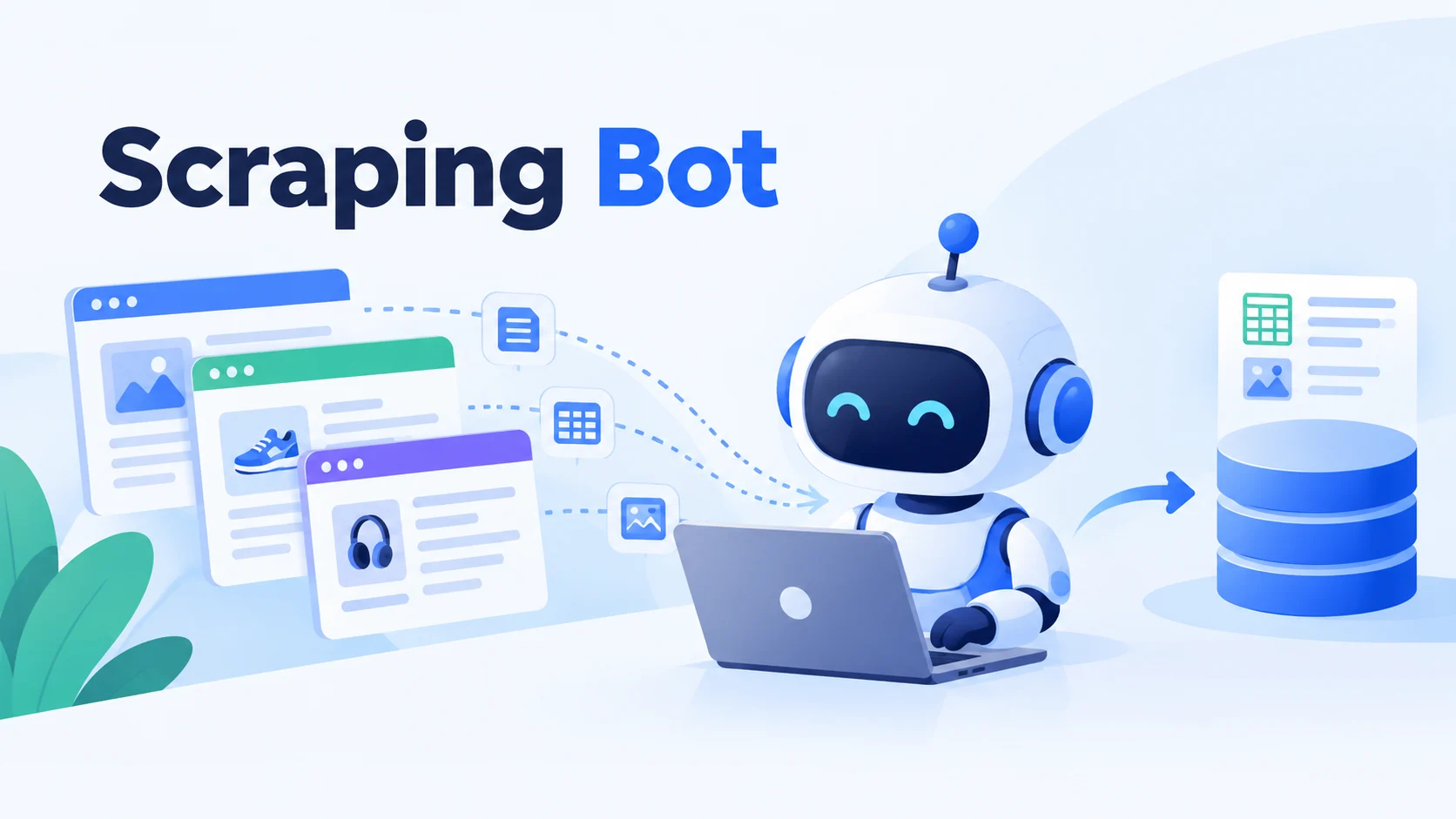
Imagine a company needs to track product prices, inventory, or page changes across dozens or even thousands of websites. Checking each page manually would quickly become repetitive and time-consuming. A scraping bot can automate this work by visiting web pages, extracting specific information, and collecting the results according to predefined rules.
But a scraping bot is more than a simple data collection script. It needs to handle different page structures, dynamic content, access restrictions, and data quality issues. Therefore, this guide will give you a complete overview of scraping bots, including how they work, how to build one, and how proxies can help along the way.
What Is a Scraping Bot?
A scraping bot is an automated software program that visits web pages, extracts specific information, and collects the data for further use or analysis. Instead of manually opening pages and copying information, the bot follows predefined instructions to repeat the same process automatically.
The basic process can be understood through three actions:
Visit: The bot accesses the target web pages or URLs.
Extract: It identifies and extracts the required information from the page.
Collect: It stores and organizes the extracted data for later analysis or use.
The main value of a scraping bot is automation. It can repeatedly collect large amounts of structured information without requiring someone to check every page manually. This makes it useful for tasks where data needs to be collected frequently or from many pages.
The terms web scraper, crawler, and scraping bot are often used interchangeably, but they can have slightly different meanings. A crawler generally focuses on discovering and visiting web pages, while a scraper focuses on extracting data. A scraping bot can combine both functions as part of an automated data collection workflow.
How Does a Scraping Bot Work?
A scraping bot typically follows a series of steps from identifying the target pages to storing the extracted information. The basic process of scraping the web is as follows.
Determine the target pages. The bot receives a list of URLs or identifies pages according to predefined rules.
Send a request or load the page. It accesses each target page and receives its content. Depending on the website, this may involve a standard HTTP request or browser automation.
Parse the page content. The bot processes the HTML or rendered page to understand its structure.
Extract the required data. It locates specific elements such as product names, prices, ratings, or publication dates.
Store and process the results. The extracted information can be cleaned, validated, and saved in formats such as CSV, JSON, or a database.
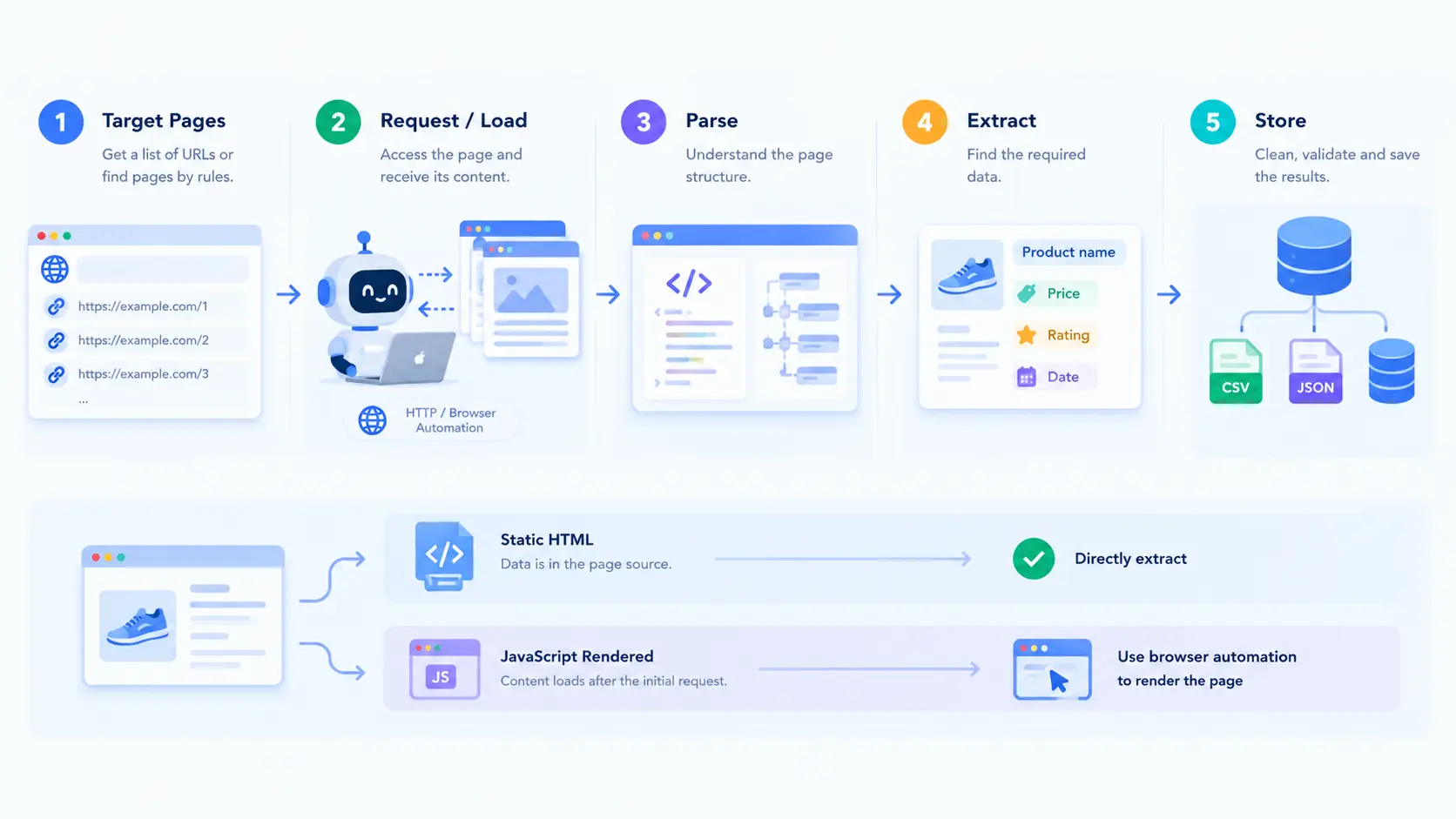
Not every website works the same way. Some pages contain the required information directly in the HTML, while others use JavaScript to load content after the initial page request. In those cases, browser automation may be needed to render the page before the bot can extract the data.
What Are Scraping Bots Used For?
Large-scale web data collection often involves information that needs to be gathered repeatedly or monitored over time. Automated scraping can reduce manual checking and make it easier to gather information from multiple sources consistently.
Scraping bots are particularly useful for large, repetitive, or frequently updated web data collection tasks. Common applications include monitoring prices, tracking news and media, and collecting real estate data.
Price Monitoring and Comparison
E-commerce and retail businesses can use scraping bots to collect product prices, inventory information, and promotions from multiple websites. For example, a company tracking products on eBay can scrape eBay product data to monitor prices, compare similar items, and track changes over time. This makes it easier to identify market trends without checking every product page manually.
News and Media Monitoring
News websites and media sources publish new content throughout the day, making continuous monitoring difficult to perform manually. Scraping bots can automate data scraping by collecting publicly available headlines, articles, reports, and other relevant information from multiple sources. The collected data can then support news aggregation, media monitoring, or content analysis, allowing organizations to track developments across a broader range of sources.
Real Estate and Property Data Collection
Real estate data is often distributed across a large number of property listings and websites. To scrape real estate data, a bot can collect information such as property prices, locations, floor areas, property types, and listing status. For example, a market research team could monitor listings across several areas and organize the information for regional price comparisons, property analysis, or broader market research.
How to Build a Scraping Bot
Building a basic scraping bot usually involves choosing suitable tools, defining what needs to be collected, creating the data workflow, and preparing the bot to handle more complex pages.
Choose a Programming Language and Scraping Tool
Start by choosing a programming language based on the target website and project requirements. Python and JavaScript/Node.js are common choices.
The scraping tool should then match the page structure:
Page or Task | Suitable Tool |
Static HTML parsing | BeautifulSoup |
Large-scale web crawling | Scrapy |
JavaScript-rendered pages | Playwright, Puppeteer, or Selenium |
Install the selected tool and create a basic project. You can then use it to send requests or load the target page before moving on to data extraction.
Define the Target Pages and Data
Before writing the scraping logic, define exactly what you need the bot to collect when scraping websites. Start by listing the target URLs and identifying the required data fields, such as titles, prices, ratings, or publication dates.
You should also determine which page types the bot needs to handle, including list pages, detail pages, and pagination. Then, set the desired crawl frequency and output format, such as CSV, JSON, or a database. These requirements give you a clear specification for the scraping workflow.
Build the Scraping Workflow
Once you have defined the target pages and data fields, turn them into a repeatable workflow. You can structure the process around request handling, data extraction, validation, and storage.
Make sure the workflow can detect missing fields, inconsistent formats, and duplicate records before saving the results. You should also add basic error handling and logging so you can identify failed requests, parsing errors, and other issues when the bot runs repeatedly.
Finally, choose an output format that fits your project, such as CSV, JSON, or a database, and make sure the workflow can process new results consistently.
Handle Dynamic Content and Anti-Bot Measures
Before running your bot at scale, check how the target website delivers content and responds to automated requests. If important information is loaded through JavaScript and does not appear in the initial HTML, you can use browser automation tools such as Playwright, Puppeteer, or Selenium to render the page before extracting the data.
You should also adjust your request strategy when a website applies rate limits or other anti-bot measures. For example, reduce the request rate and add reasonable intervals between requests. In addition, caching can help avoid repeatedly requesting unchanged data, while proxies can distribute requests across different IP addresses and support location-specific scraping.
If you encounter CAPTCHAs or other access restrictions, review the website's requirements and adjust your scraping workflow accordingly rather than repeatedly sending requests.
What Challenges Do Scraping Bots Face?
Building a scraping bot is only the first step. As you run it over time or at a larger scale, changes in target websites, growing data volumes, and increasing request loads can create new challenges.
Changing Page Structures: Website redesigns can change HTML elements, selectors, or page layouts, causing existing extraction logic to stop working.
Data Quality: Scraped results may contain missing fields, duplicate records, inconsistent formats, or outdated information, requiring additional validation and cleanup.
Scalability and Performance: As the number of pages or websites increases, your bot needs to handle more requests and data without becoming too slow or resource-intensive. Network infrastructure can become an important part of scaling the workflow.
Maintenance: Websites can change their content structure, URLs, or data delivery methods over time, so you may need to update and test the scraping logic regularly.
These challenges make stability, data quality, scalability, and ongoing maintenance important considerations for a scraping project.
How Do Proxies Help With Web Scraping?
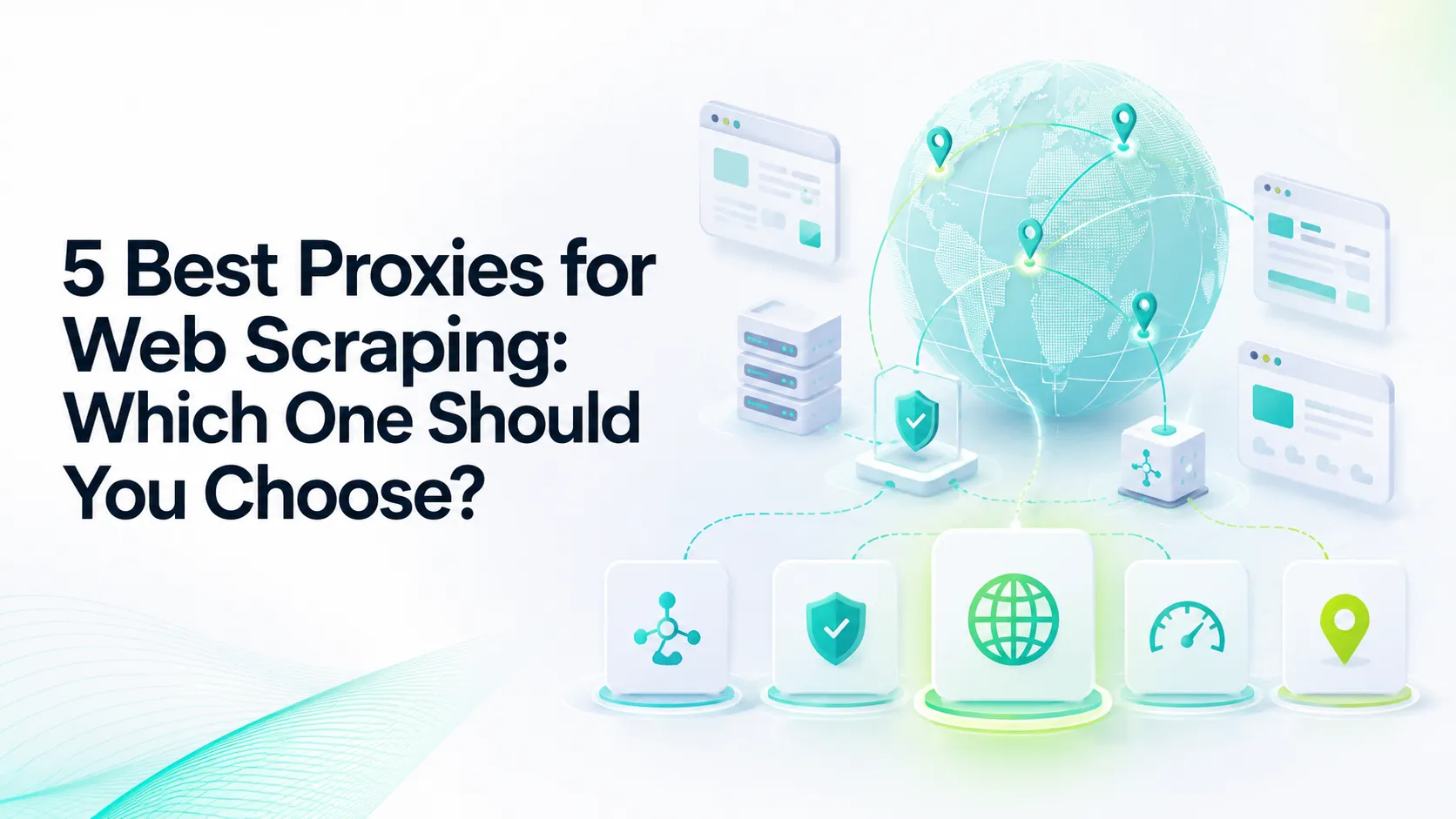
As web data scraping tasks grow in scale, managing network requests becomes an important part of the process. A proxy acts as an intermediary between the scraping bot and the target website, forwarding requests through a proxy server rather than connecting directly to the destination.
Proxies can support scraping tasks that involve multiple IP addresses or location-specific content. For example, distributing requests across different IPs can reduce reliance on a single IP address, while location targeting allows you to collect content that varies by country or city. These capabilities can make large-scale data collection more flexible.
There are two common proxy types that serve different scraping needs:
Datacenter Proxies: Offer fast connections for high-volume scraping tasks, making them a practical option for speed- and cost-sensitive projects.
Residential Proxies: Use residential IP addresses to support location-specific data collection and access to geographically varied content.
The right proxy provider can further support these needs with suitable IP coverage, location targeting, and connection stability. Among the available options, IPcook Residential Proxies offer a pool of 55M+ IPs across 185+ countries and regions, with country- and city-level targeting and plans starting at $0.30/GB, helping you collect data from specific markets. And its Datacenter Proxies start at $0.04/IP, with 99.9% stability, providing a more cost-conscious option for high-volume scraping tasks.
Conclusion
Scraping bots automate repetitive web data collection by visiting pages, extracting information, and organizing the results. They can support tasks such as price monitoring, news monitoring, and real estate data collection.
However, dynamic content, access restrictions, and data quality can all affect scraping projects. Choosing the right proxy infrastructure can make a difference as your scraping needs grow. No matter how demanding your scraping tasks are, IPcook offers various proxies to help you collect data across different locations and scale your scraping activities.